A Spirit of Solidarity: Our Second Praxis Retreat

More than ever, the sector of philanthropy faces existential questions about its role in society and highest purpose. To meet the moment, Grassroots International launched the Solidarity Philanthropy Framework last fall as a distillation of decades of lessons from accompanying social movements.
A key milestone in the framework’s development was the first Solidarity Philanthropy Praxis Retreat, held in 2024 in the outskirts of Great Barrington, MA, homeland of the Mohicans. There we exchanged insights and ideas with our peers and movement allies. This past May, we were able to deepen the dialogue on solidarity philanthropy at our second Solidarity Philanthropy Praxis Retreat.
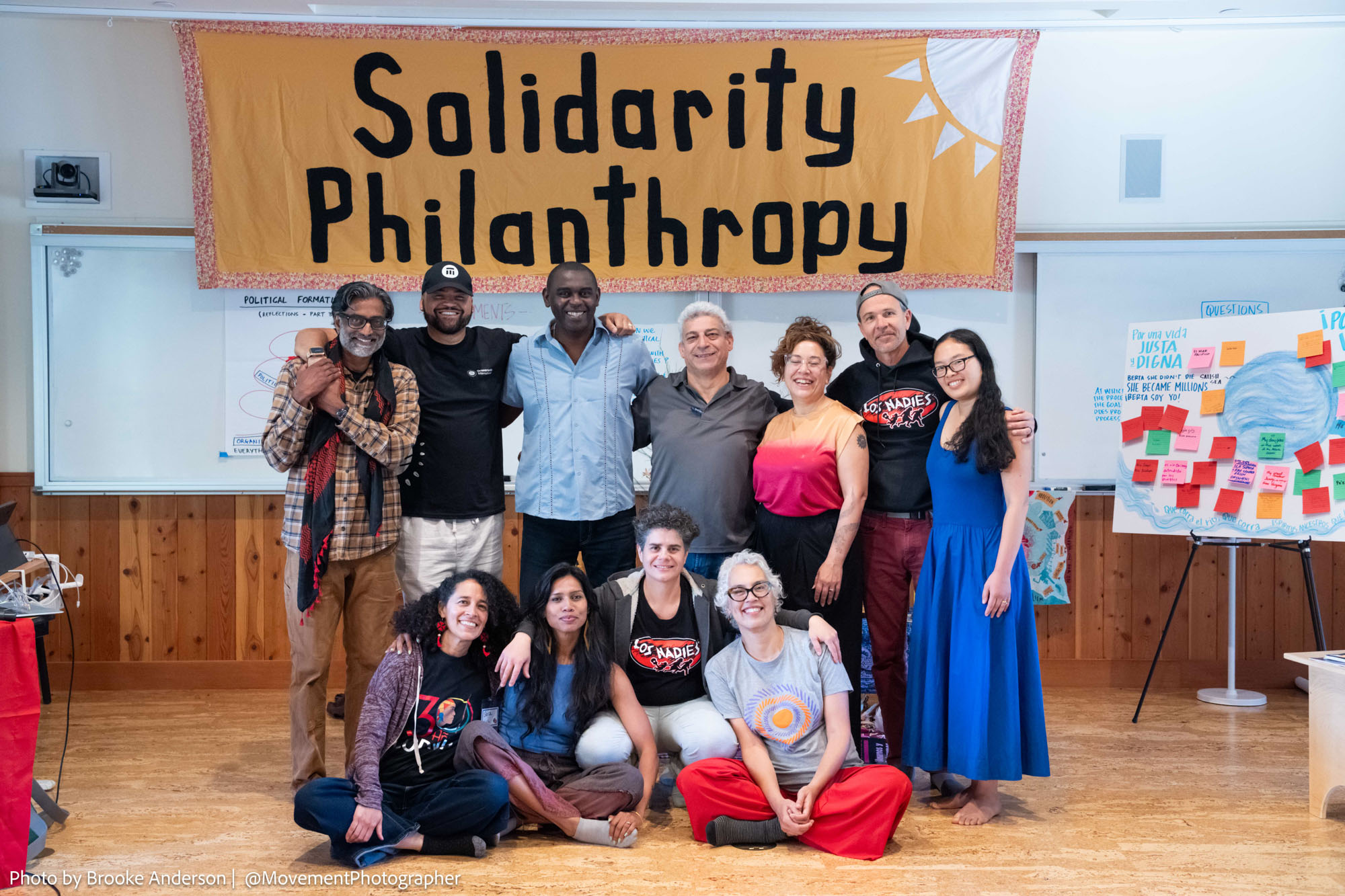
May’s gathering in Occidental, California brought together 27 participants from different wings of progressive philanthropy and several of our social movement partners from the Global South. We forged deeper solidarity between social movements and our peers in philanthropy and started a process for greater alignment to advance systemic change. Below we share a brief recap of the retreat and some of our key takeaways and highlights.
“It has been such an amazing opportunity to not only sit with peers doing work in community on behalf of their children and grandmothers, but to be in a community of funders who are looking to elevate their relationship and proximity to solidarity philanthropy… It’s such an amazing space and an evolving cohort of individuals who are really trying to support these new ways of being in relationships–not just in our immediate regional proximity, but with our relatives all around the world.” —Michael, funder participant
A Warm Introduction and Grounding
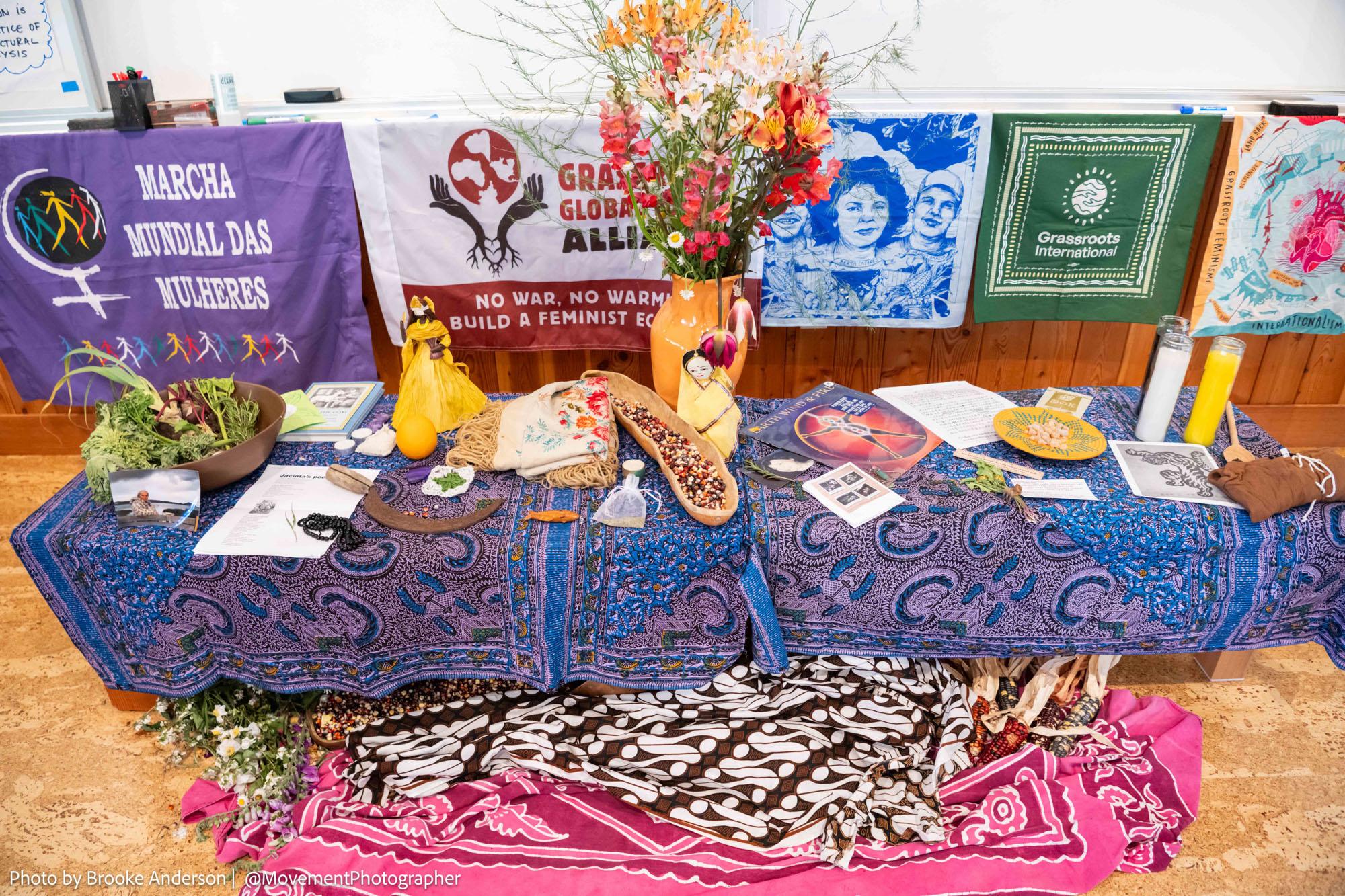
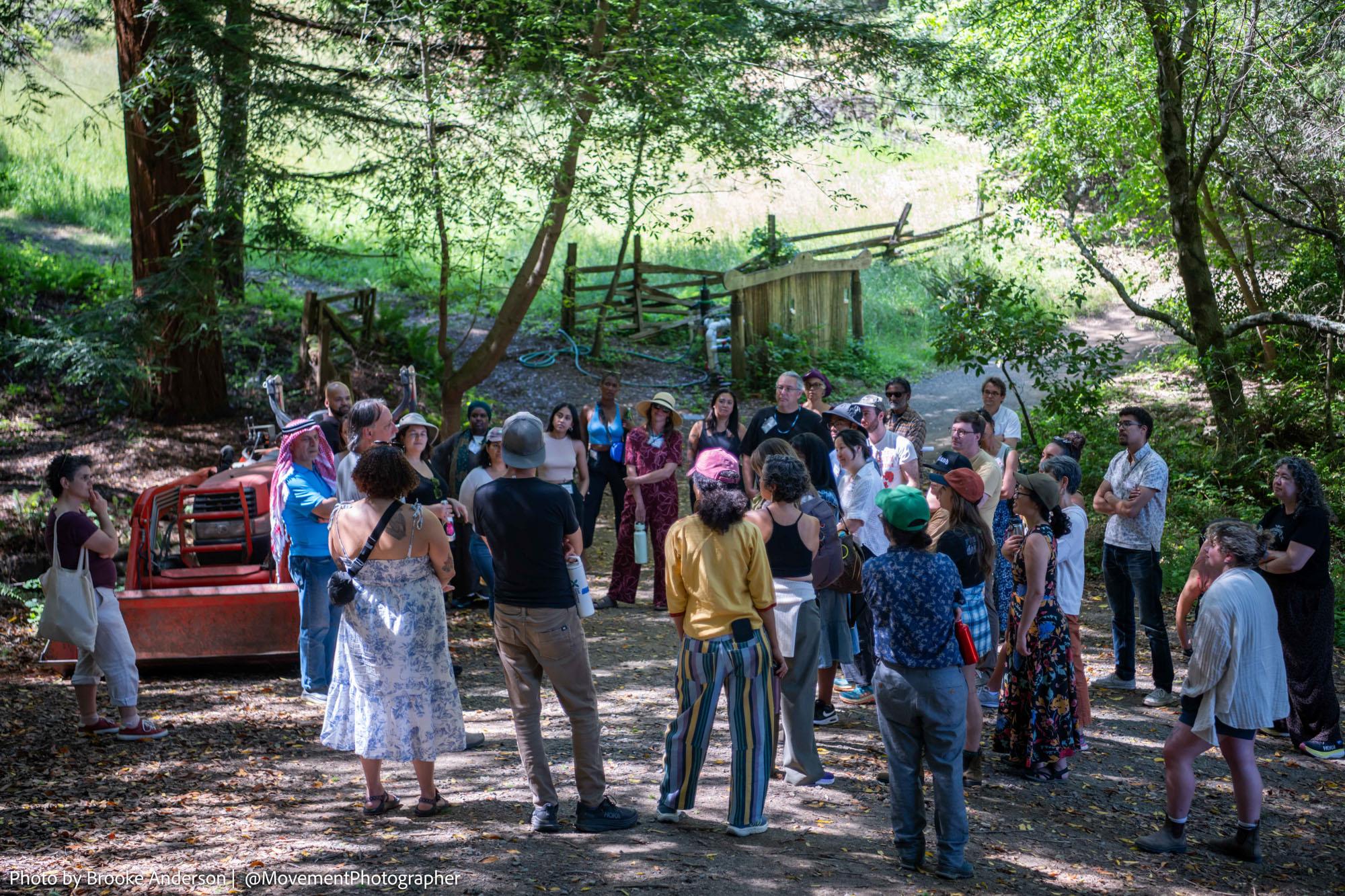
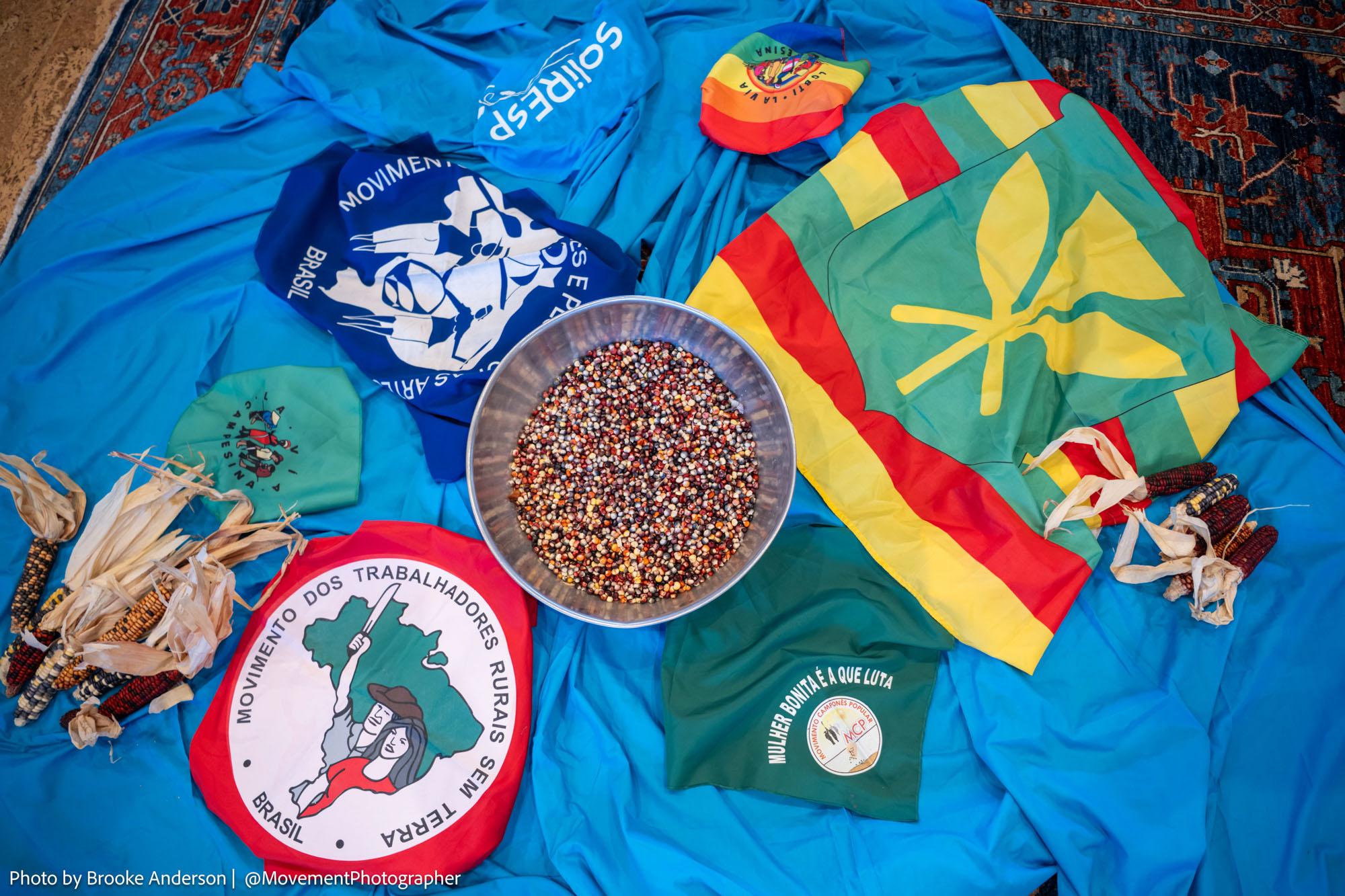
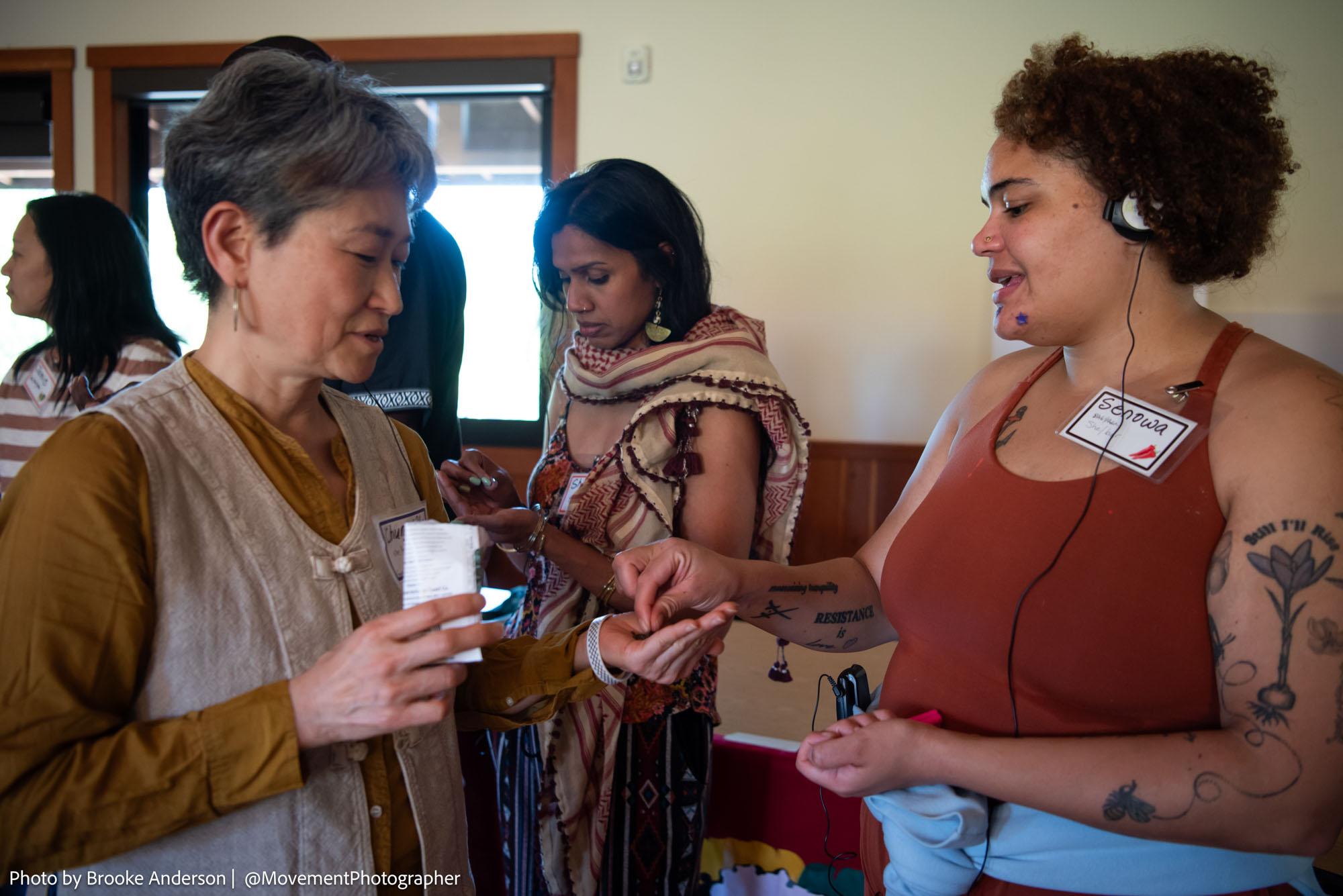
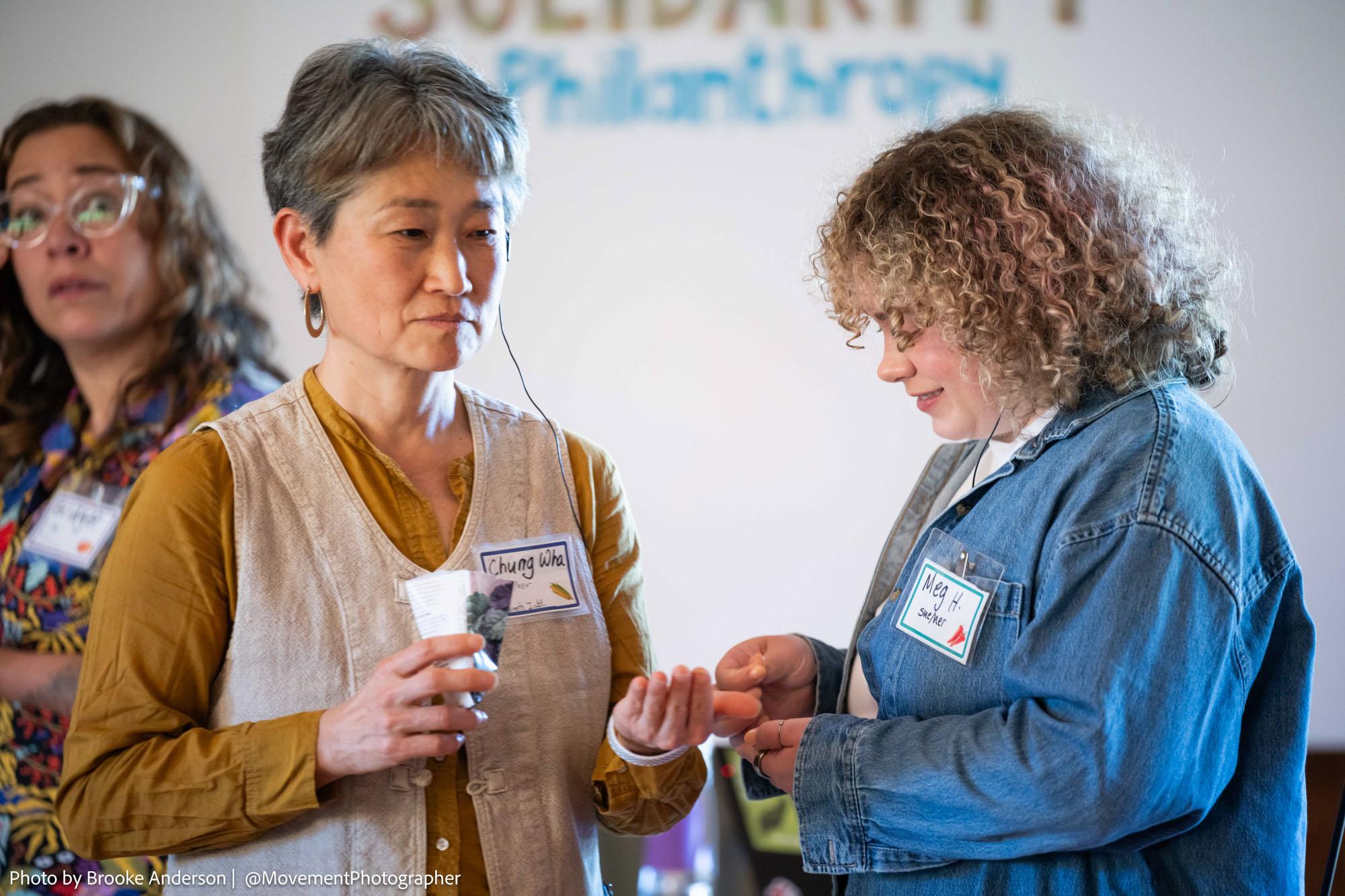
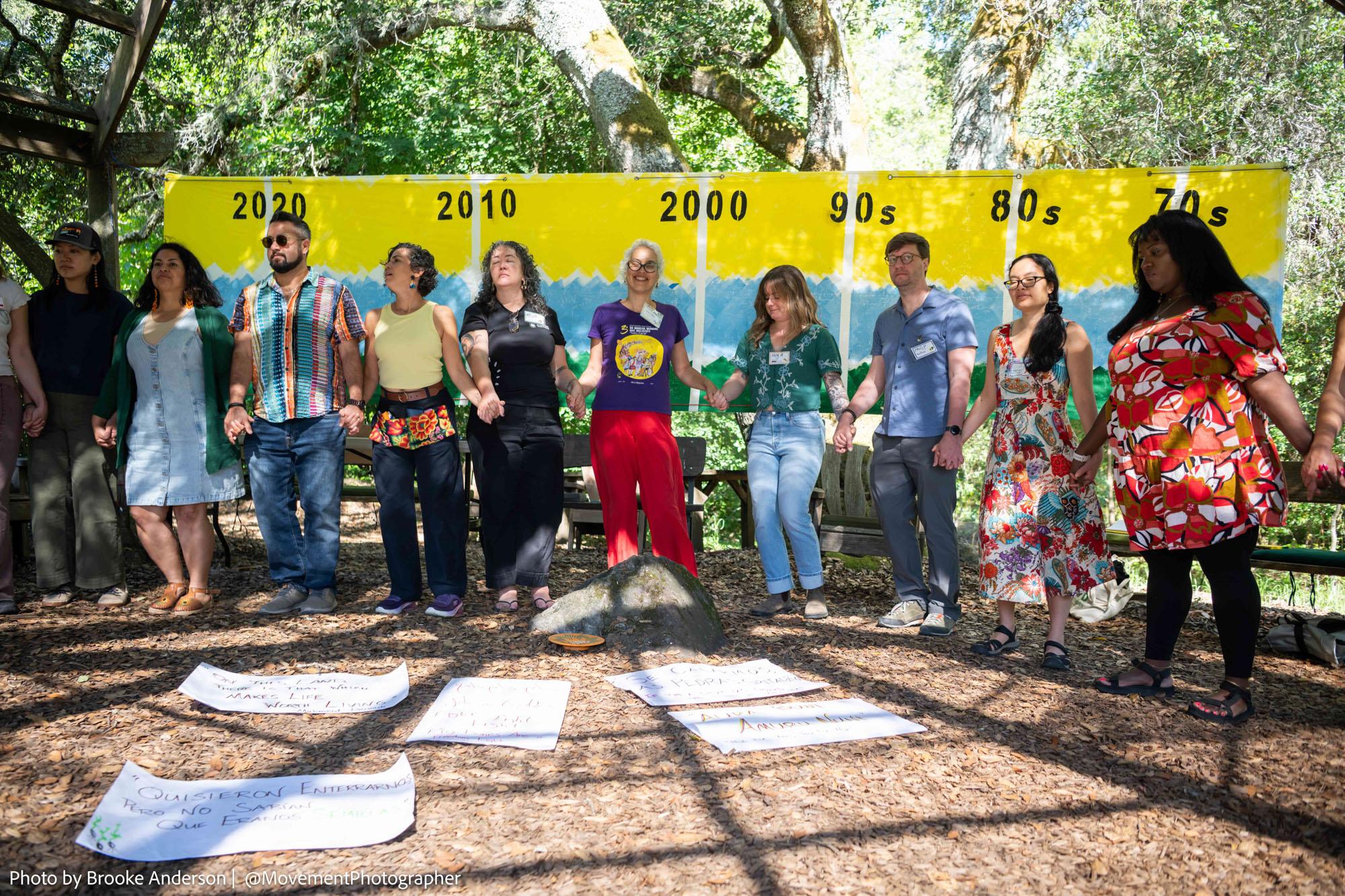
The retreat was held at the Occidental Arts and Ecology Center (OAEC), covering nearly 80 acres in West Sonoma County on the traditional lands of the Southern Pomo and Coast Miwok peoples. After the brief introduction to OAEC by its inspiring community and staff members, who were indispensable to the success of the retreat, we began the retreat with a mística. A mística is a practice for spiritual grounding and commitment to collective meaning-making inspired by the practices of Indigenous Peoples and social movements.
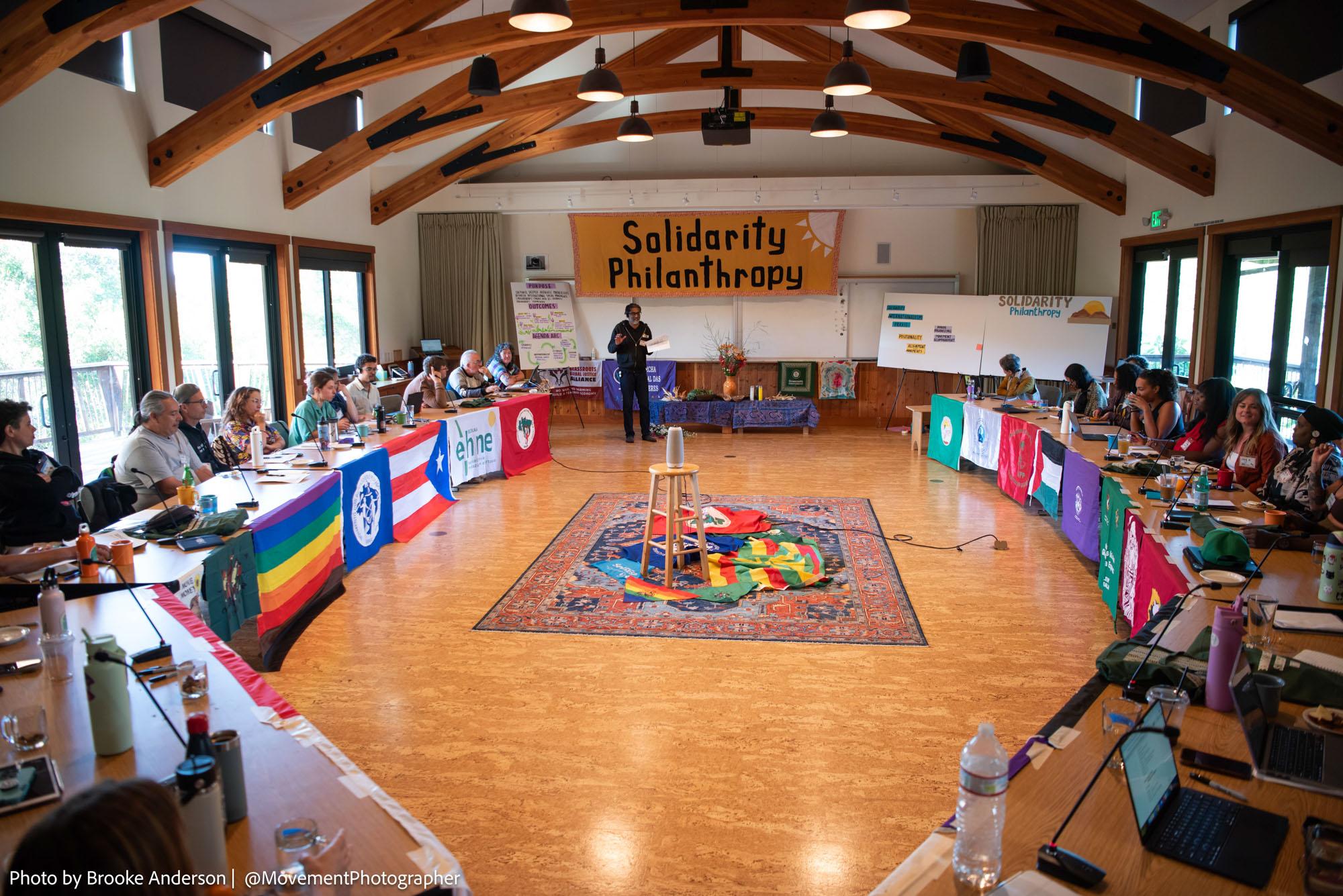
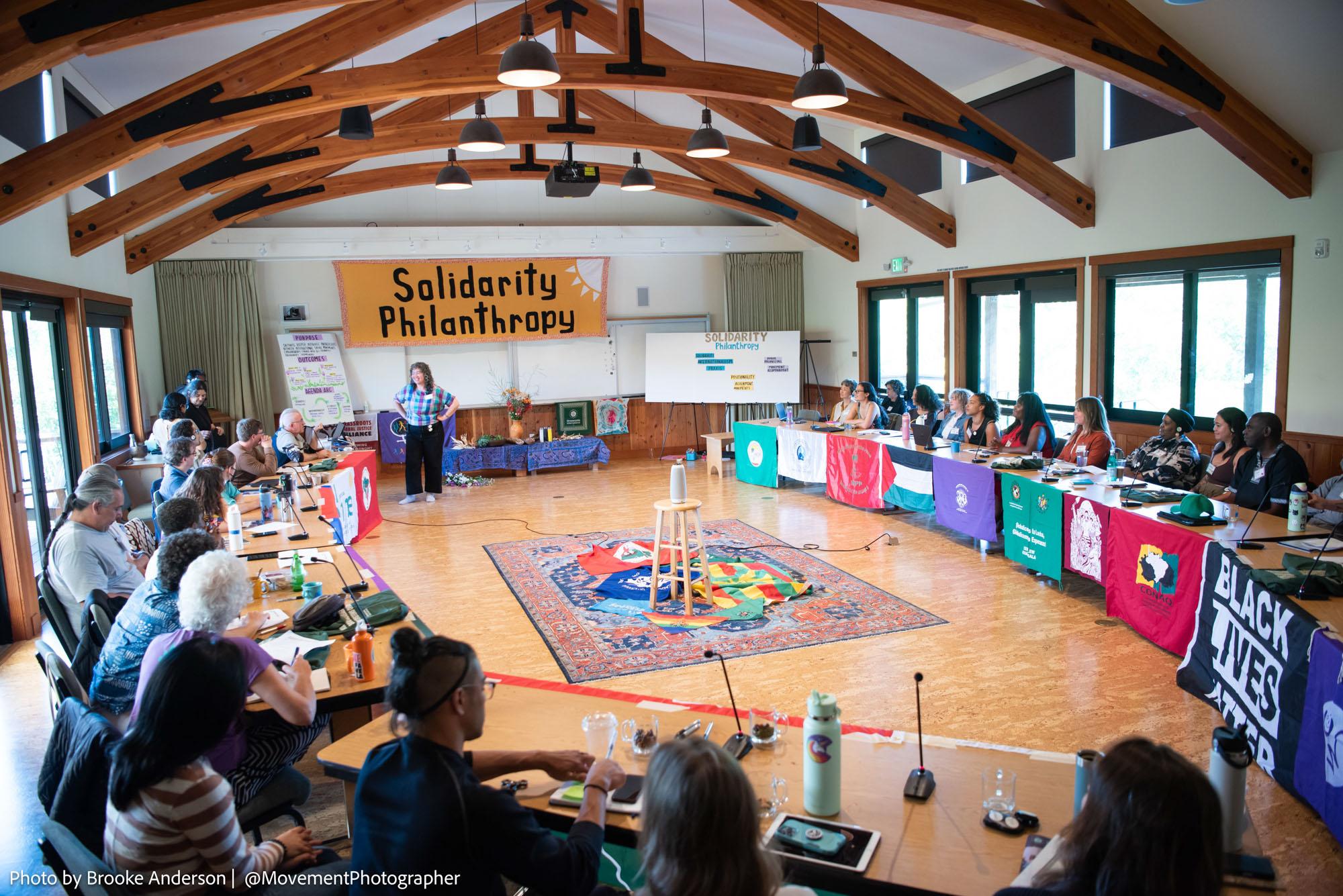
We closed our first day together diving deeper into the Solidarity Philanthropy Framework and establishing our collective purpose and expectations for the retreat. Participants arrived ready to jump right in to tease out key principles, assumptions, and open questions for the framework in order to establish a common vocabulary and conceptual foundation for effective collective organizing.



Making Sense of Movements and Philanthropy in Motion
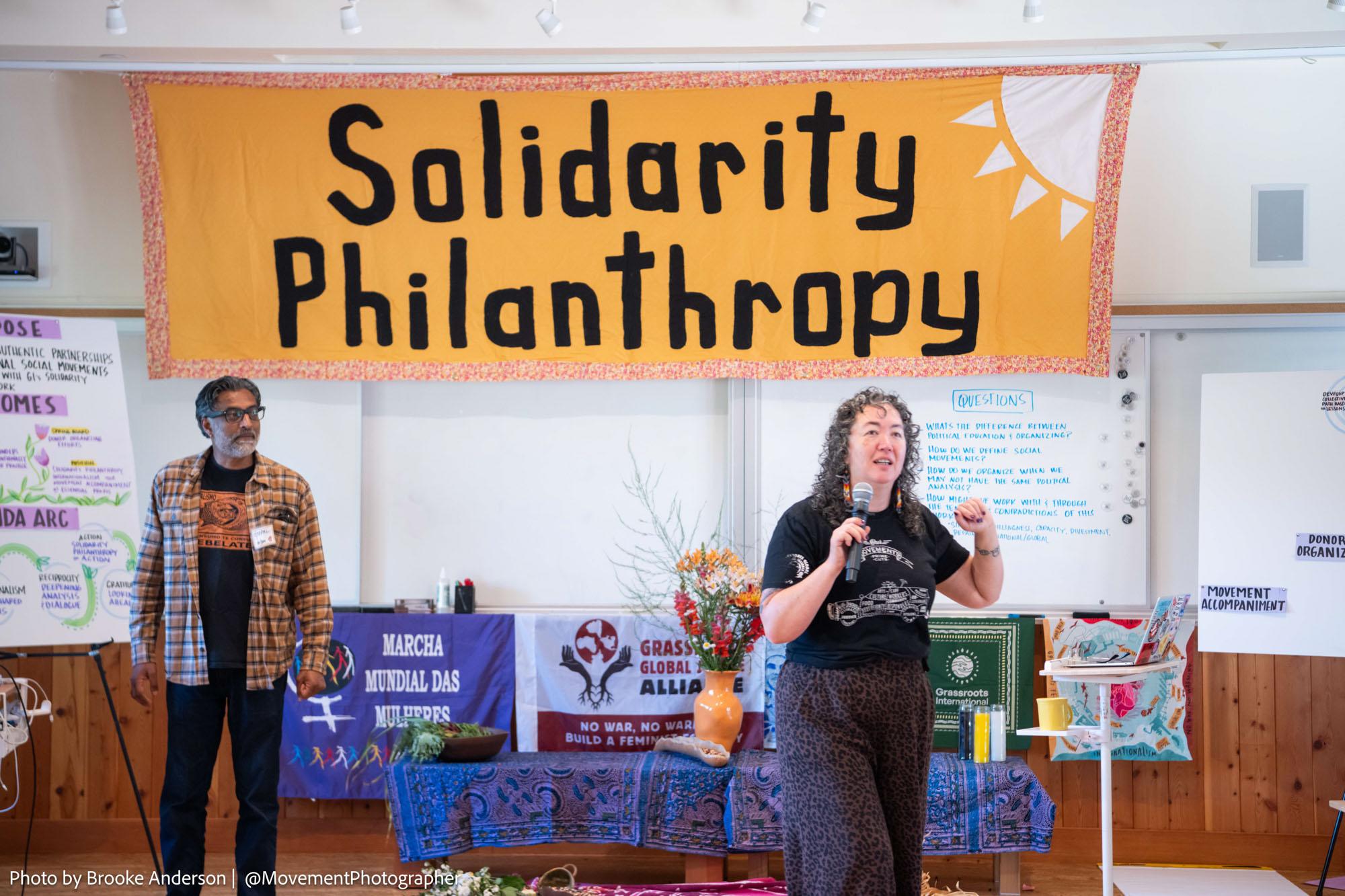
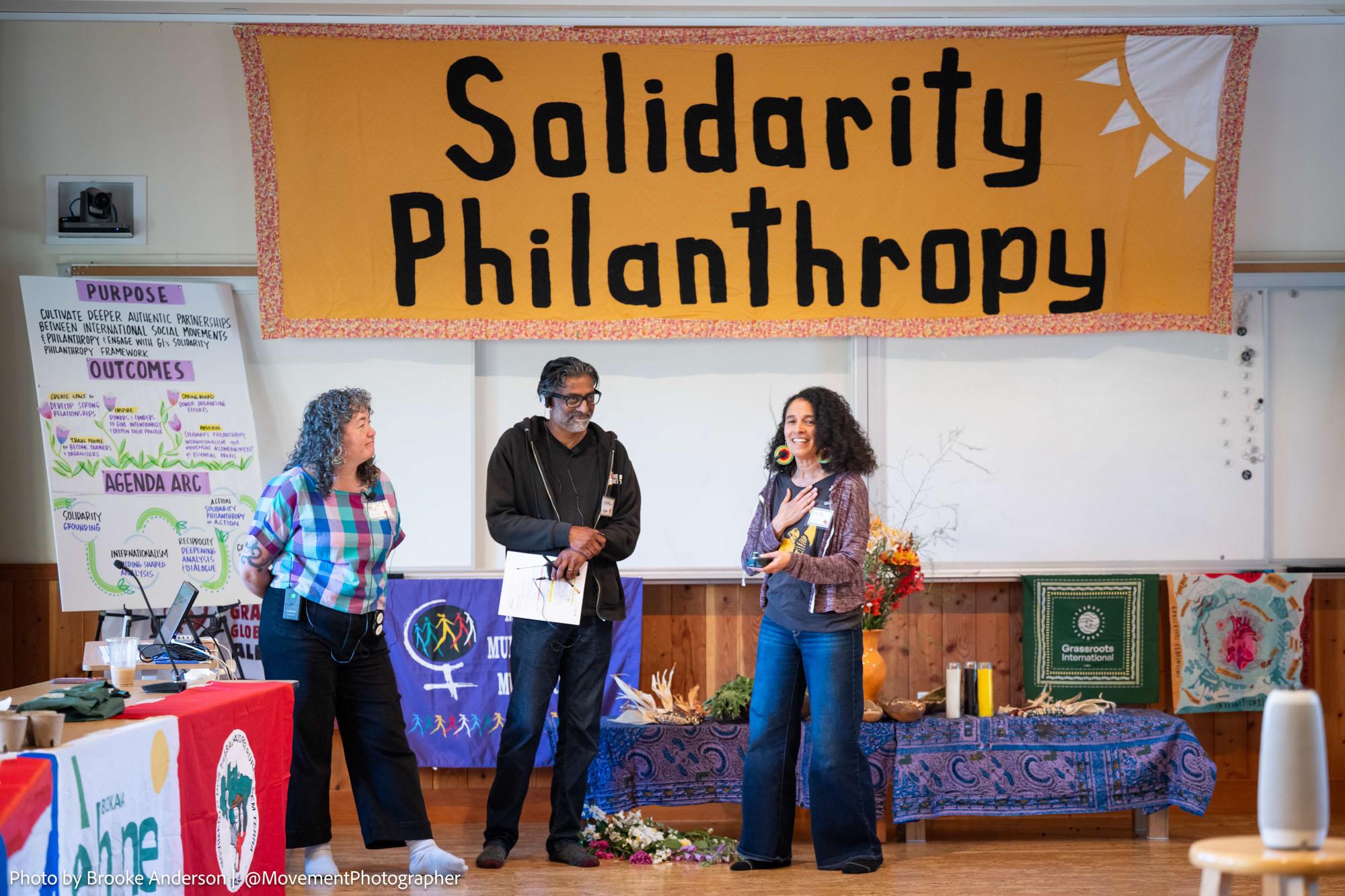
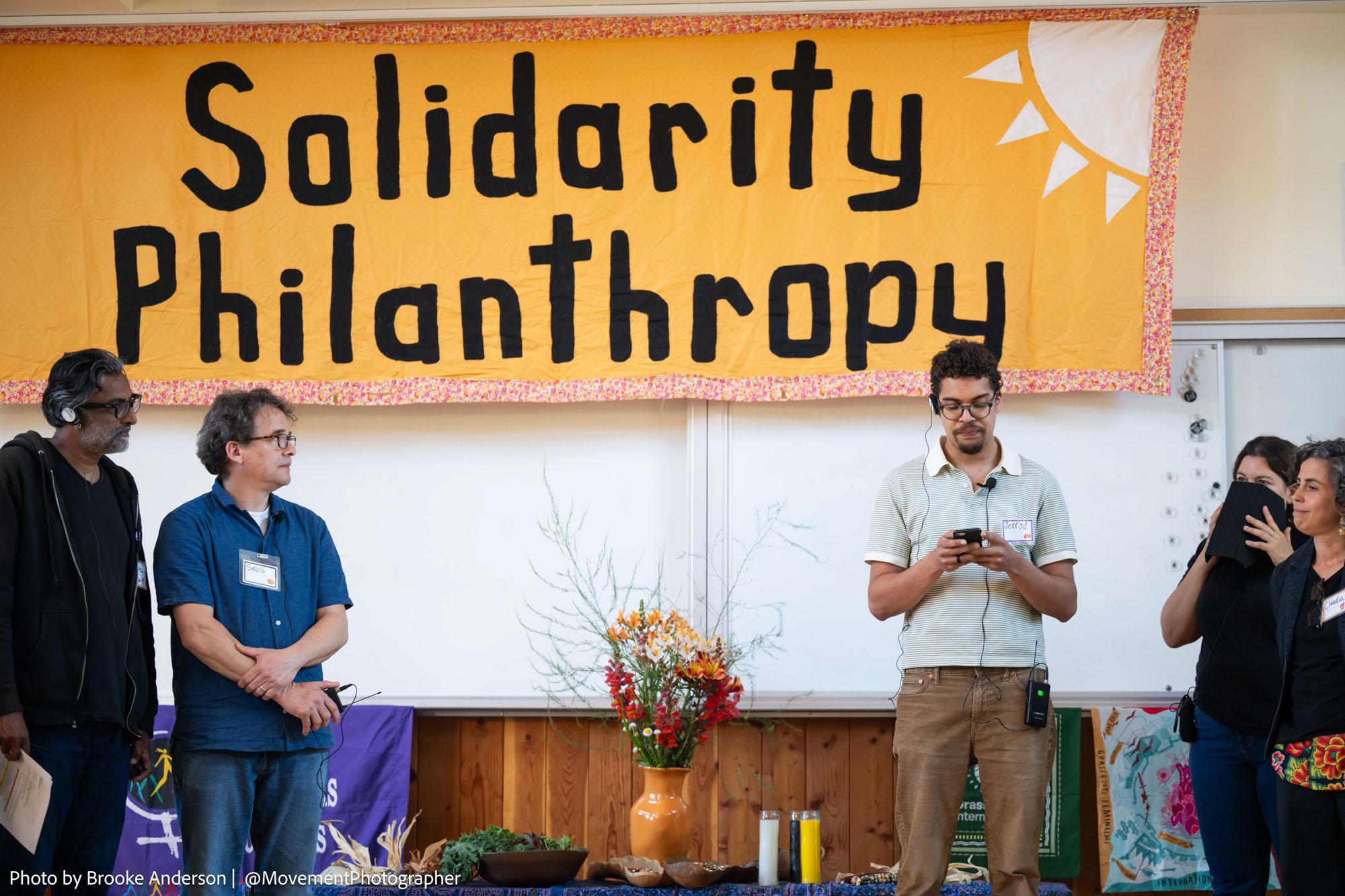
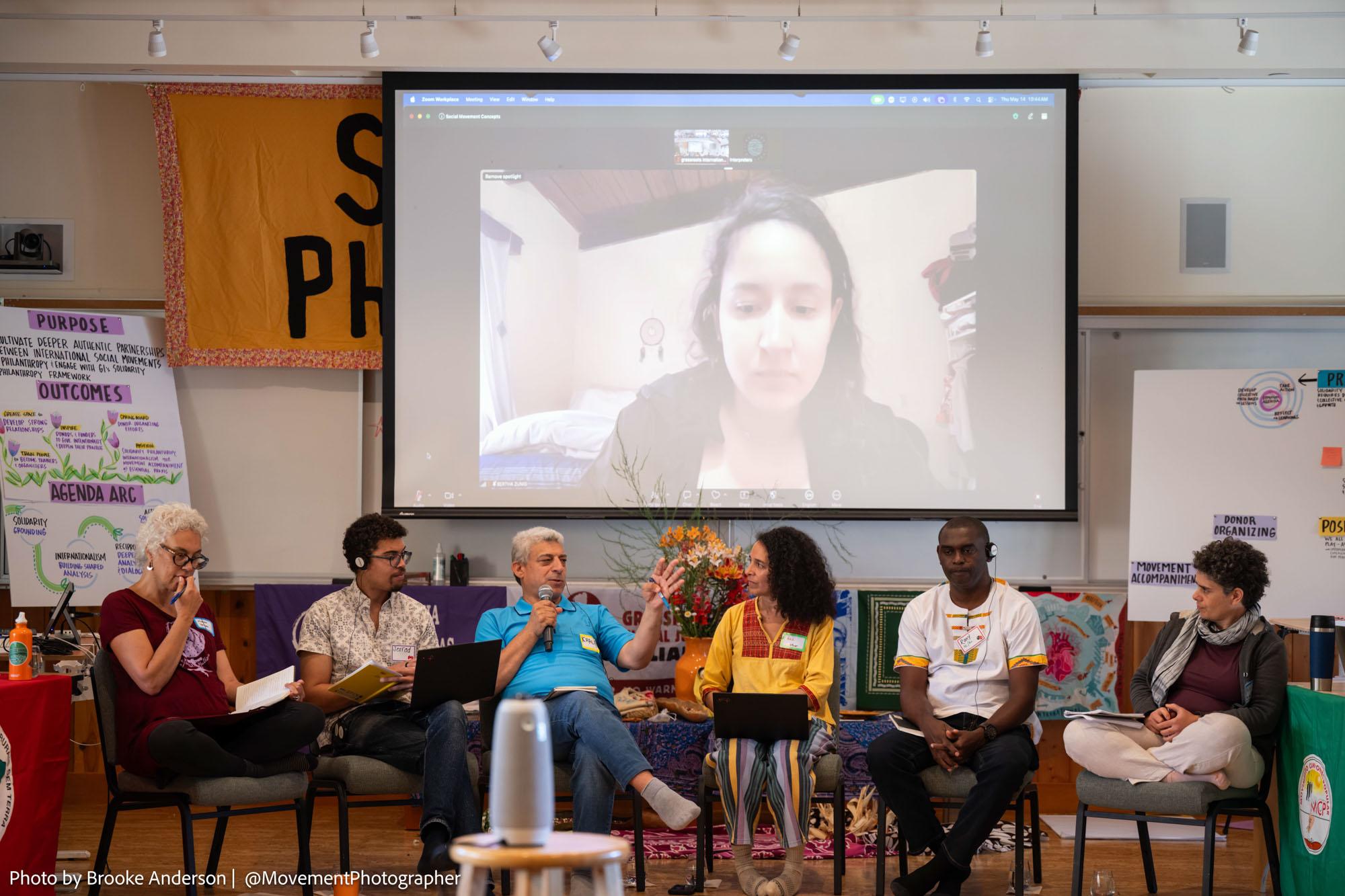
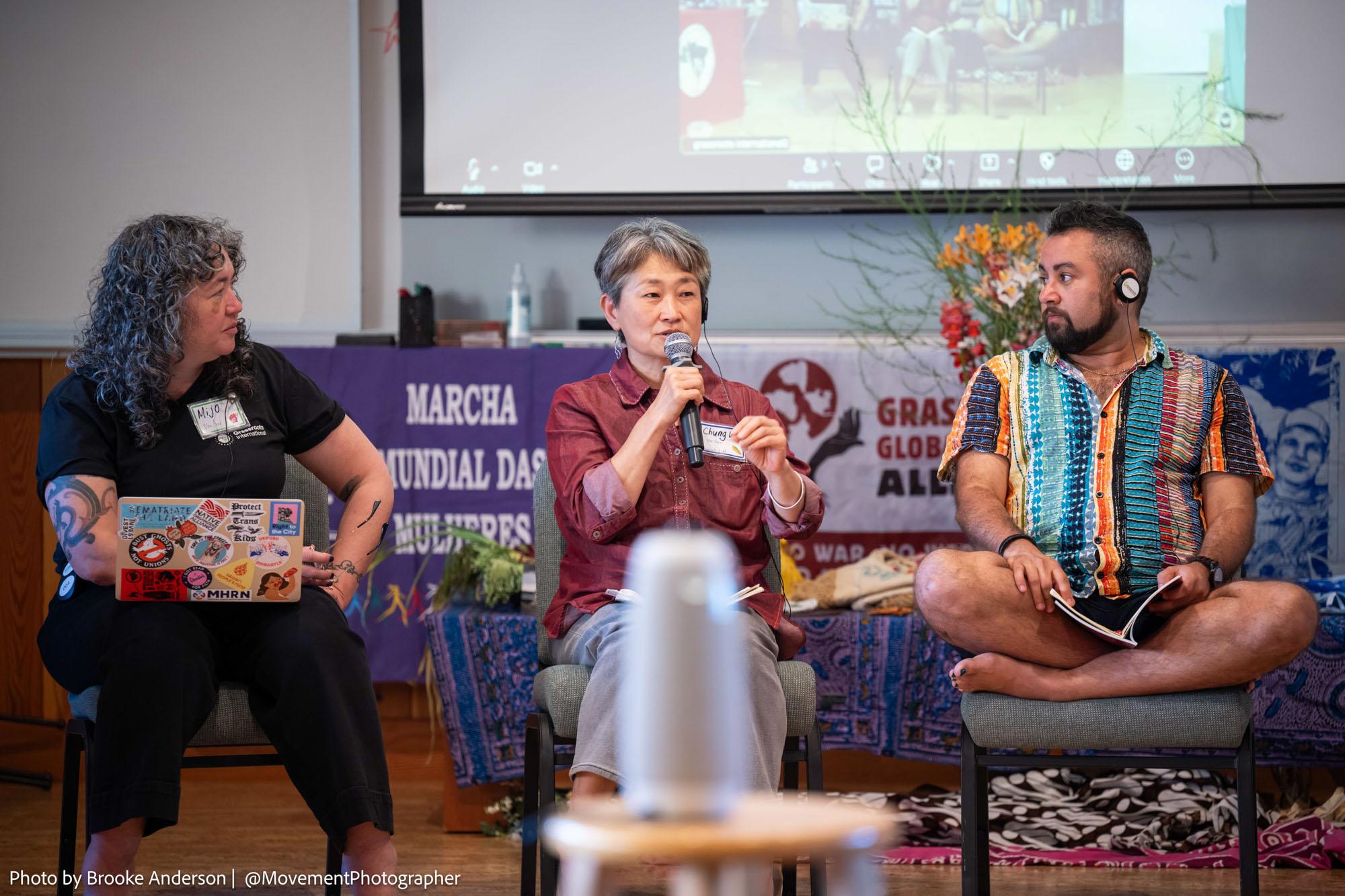
Rested and recharged, on our second day we put our social movement partners and allies on center stage for an unconventional “podcast”. Our Co-Executive Director, Sara, and Managing Director of Donor Engagement, Jerrod served as hosts. They led a conversation with social movement participants from La Via Campesina, Organización Fraternal Negra Hondureña (Black Fraternal Organization of Honduras, OFRANEH), World Alliance of Mobile Indigenous Peoples and Pastoralists (WAMIP), and the World March of Women. We aimed to deepen the group’s understanding of collective struggle and social movements, political formation and praxis, and internationalism.
The session spotlighted not only the brilliance of social movement leaders, but more importantly, the incredible achievements towards progressive social change of Global South social movements. Paula, from La Via Campesina (LVC) and representing the Nyéléni Process’ Global Steering Committee, shared a poignant reflection on how social movements create the conditions for the personal transformations that ground and drive systemic change.
They relayed their personal journey leaving their homeland and embracing their queerness, which left them in search of a political home. They eventually found one in LVC and peasant struggles in defense of the land. On their journey with the movement, they also had to push it to more fully embrace LGBTQIA+ struggles and grassroots feminisms as core pillars of its broader struggle. To do that, they had to lean into a protagonism and strength that were stoked by the very same movement.
Through years of tough conversations and political struggle, the movement has emerged not only stronger but able to offer a model to other movements on how to embrace gender and sexual diversities and harness personal transformation for systemic change.
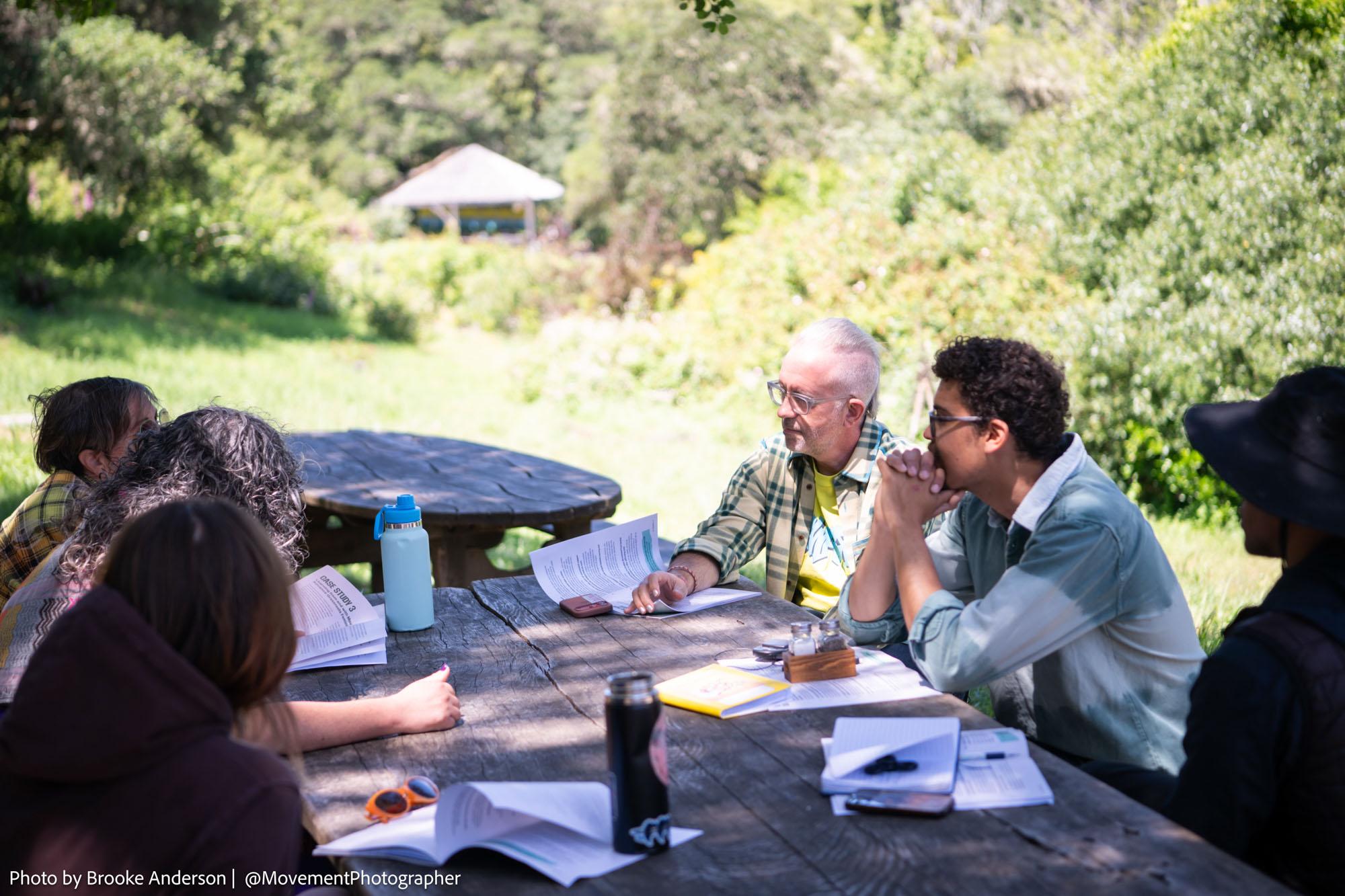
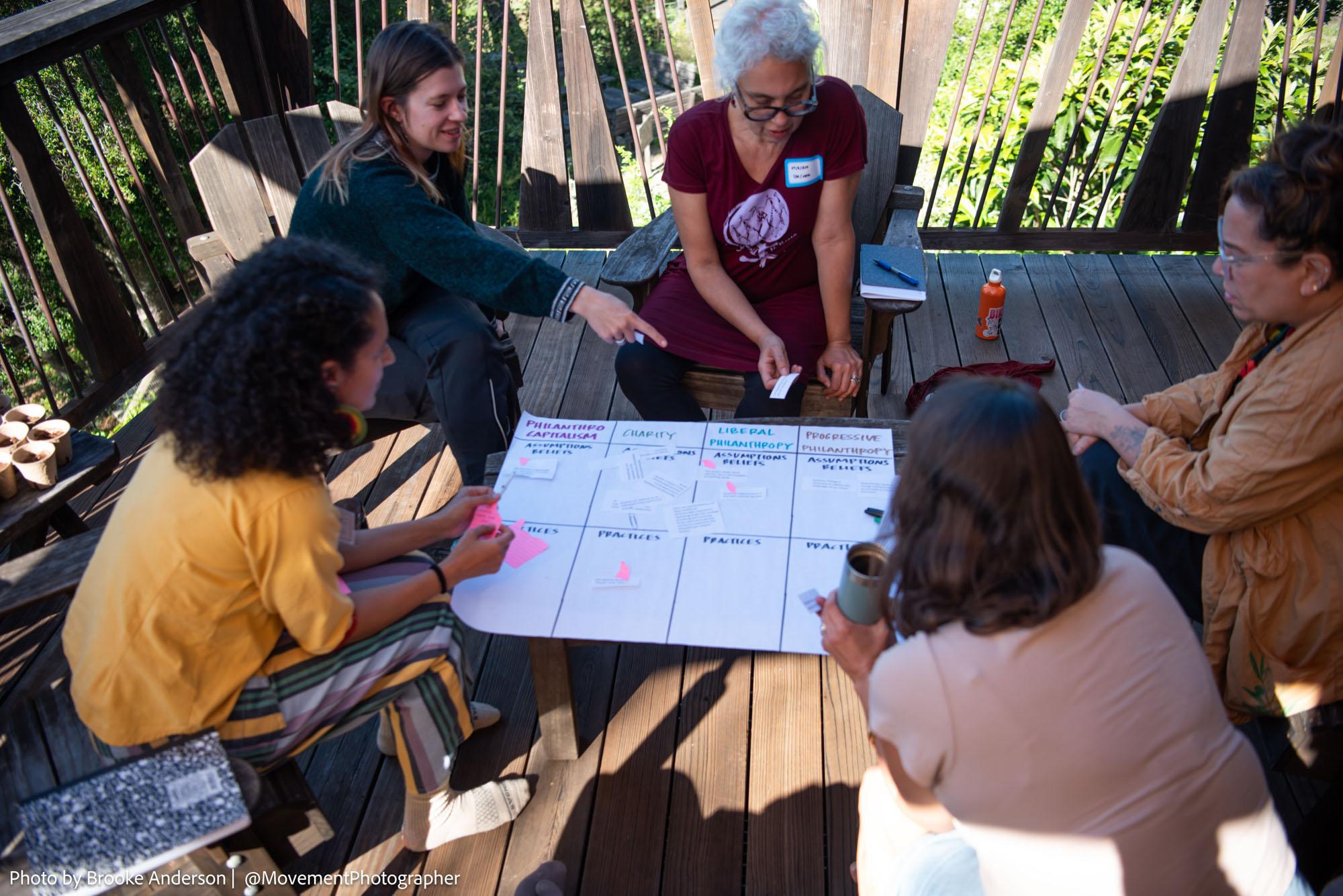
We closed our second day turning back to key questions about philanthropy, analyzing the four major tendencies of the sector identified in the Solidarity Philanthropy Framework through small group discussions and doing a gallery walk exercise. The group posed questions like: Does executive compensation reflect a philanthrocapitalist contradiction in even progressive leaning foundations? Has a lack of strategic clarity ultimately left many in philanthropy unintentionally in a charity posture?


Rooting Ourselves in Relationship and History
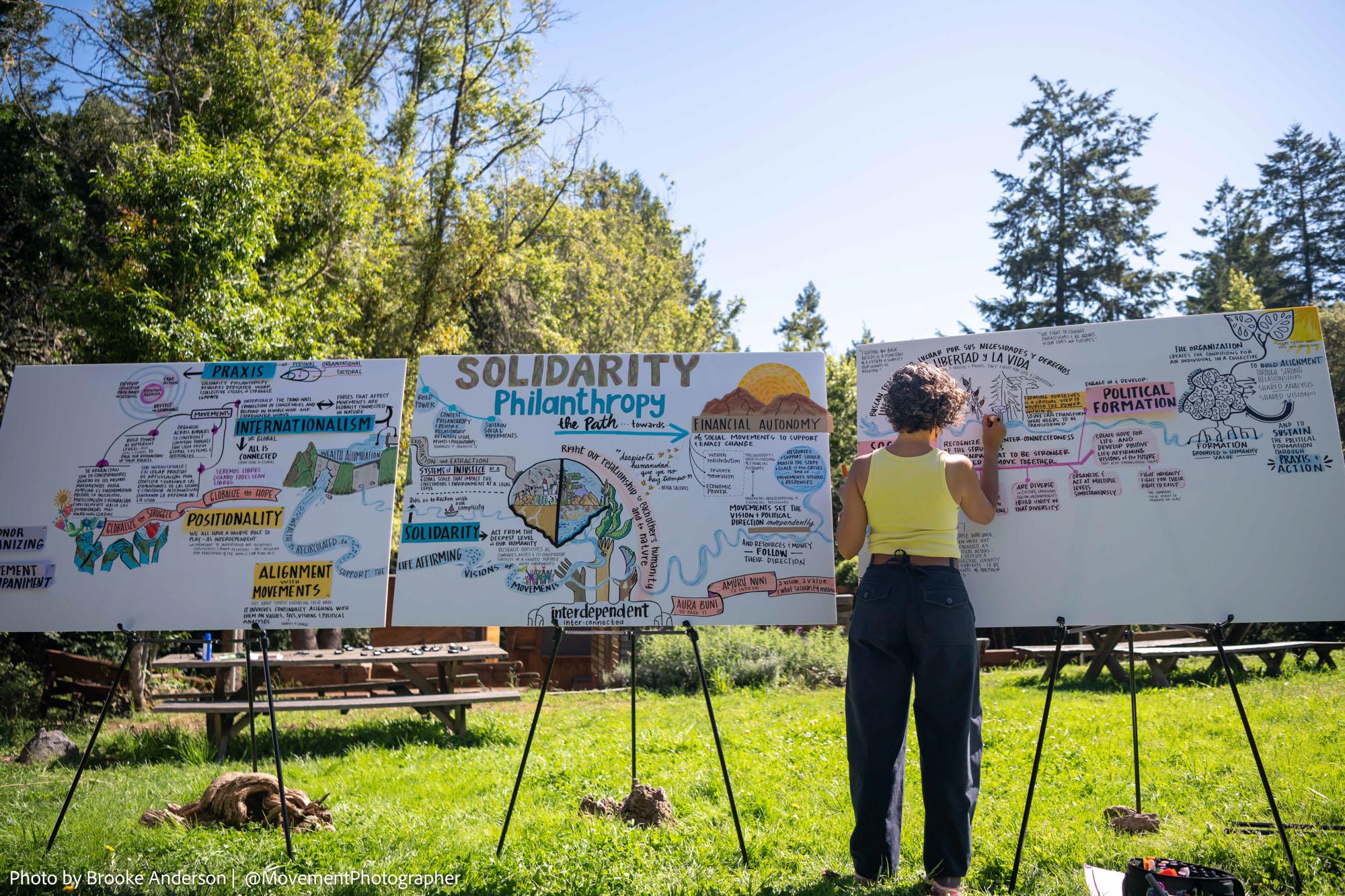
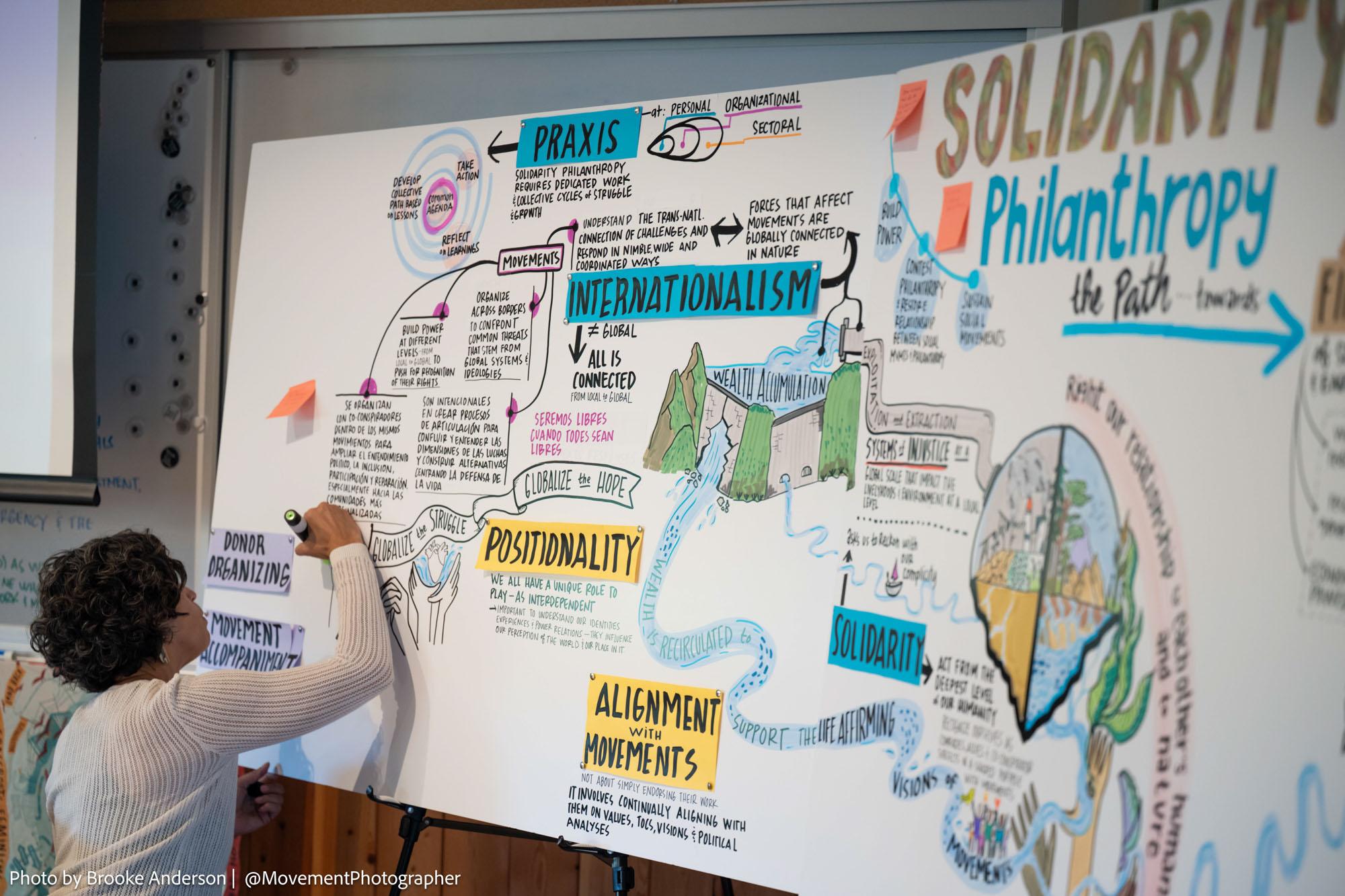
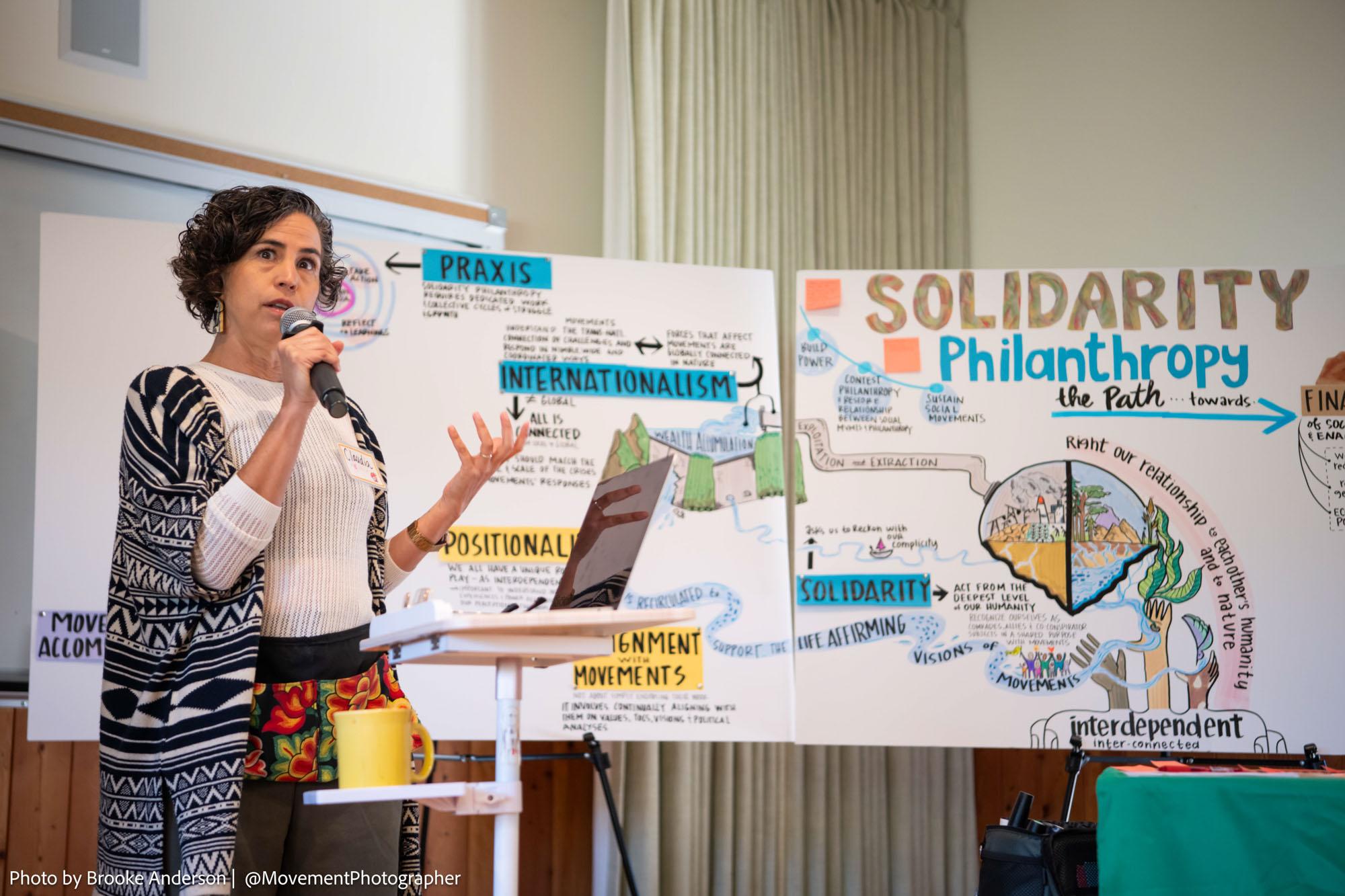
We began our third day together reflecting on the beautiful visual notes taken by our amazing artist Claudia. Participants had a chance to look at the threads that emerged in our initial time together: terms and concepts social movements and philanthropy define differently; convergences on political imperatives; open questions about bringing solidarity philanthropy and its principles back into our organizing and institutions. Following these threads gave renewed direction to our conversations for the remainder of the day.
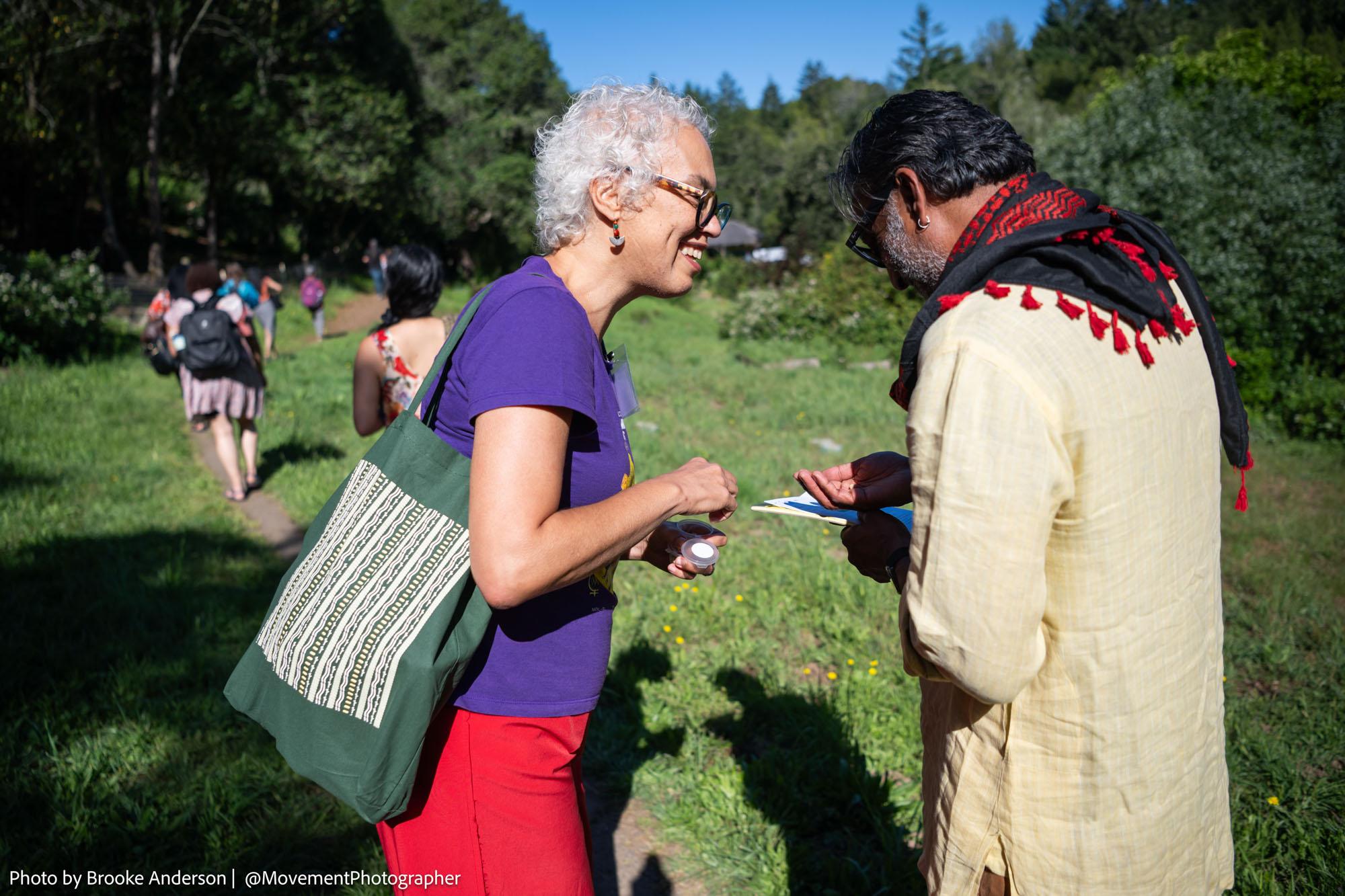
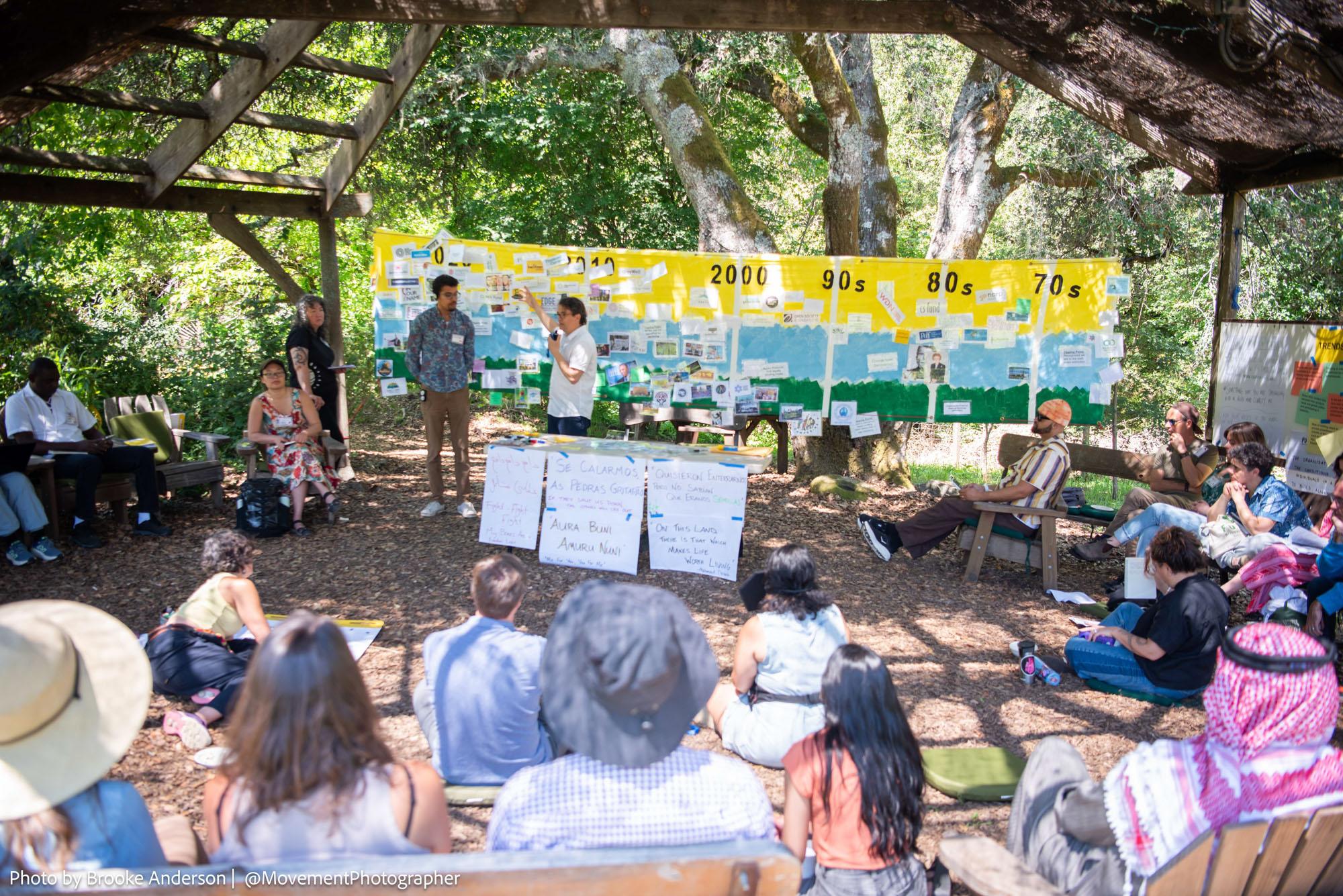
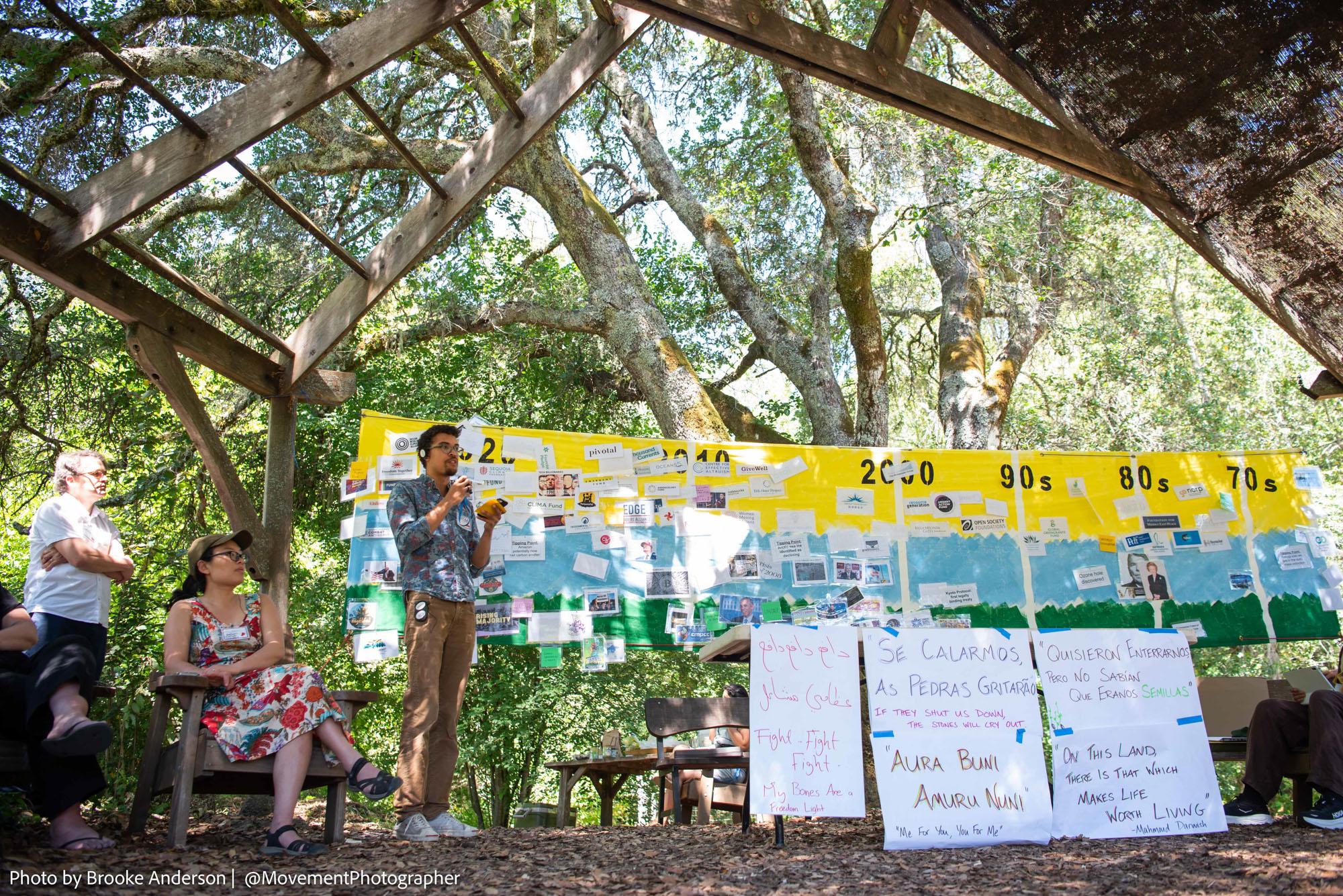
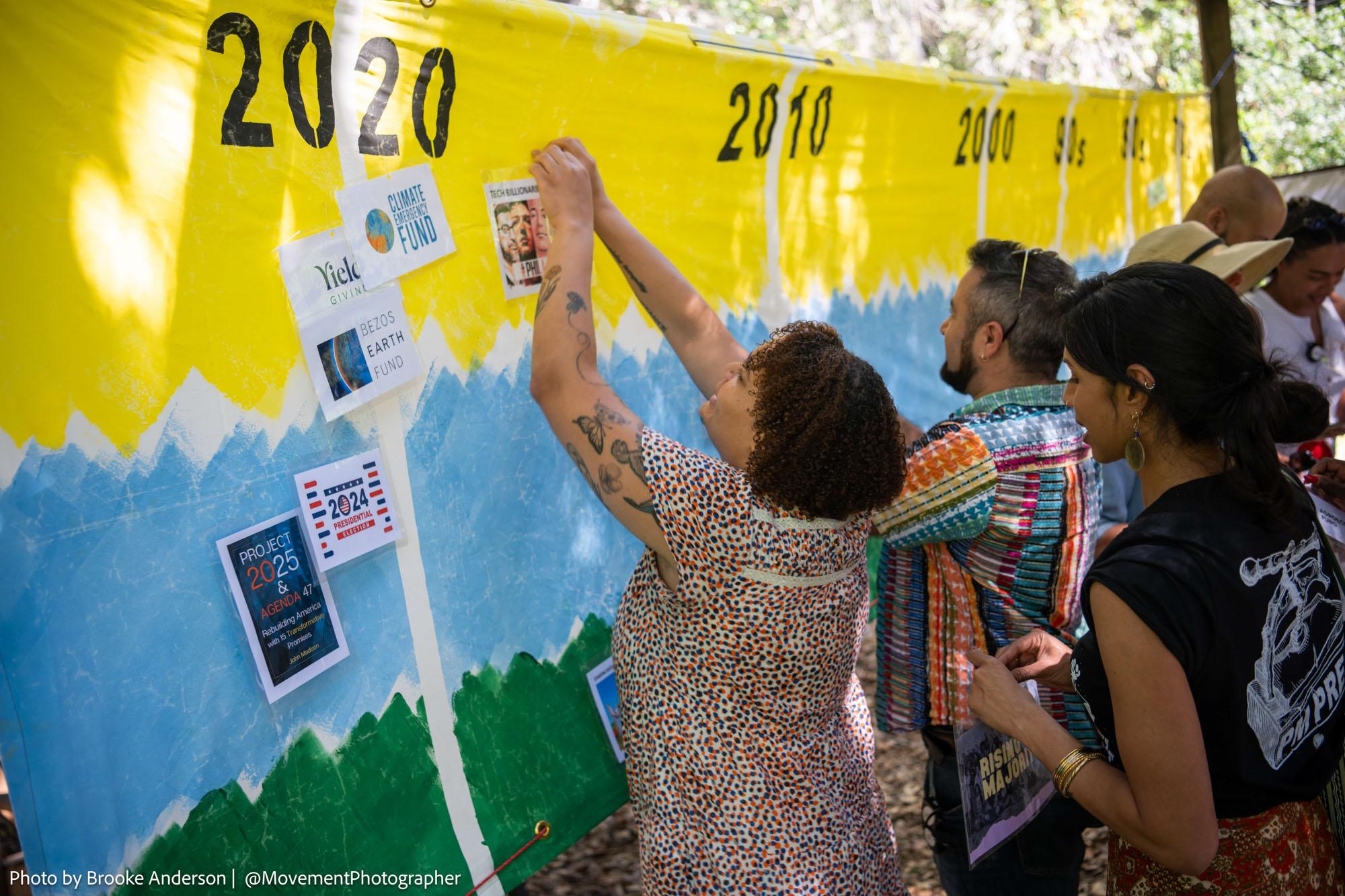
In a shaded pavilion behind the garden at OAEC, we regrouped and our Director of Global Philanthropy Saulo introduced an interactive contextual analysis exercise. A banner stretching over 12 feet represented history from the 1970s to present. Participants pinned hundreds of placards representing different organizations, events, campaigns, and more to the banner to visualize the interconnected historical arcs of philanthropy, social movements, and world events.
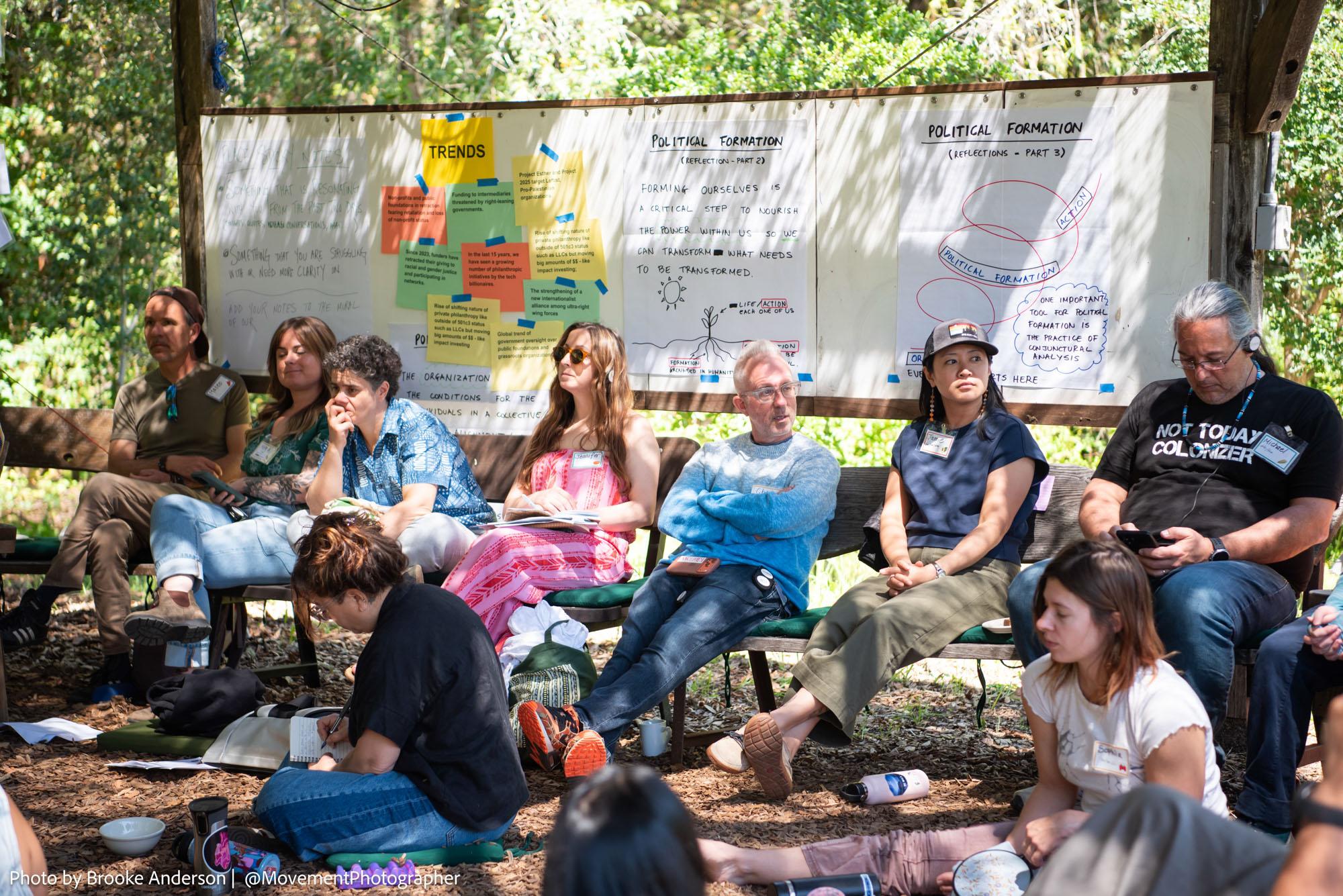
Building on the contextual analysis, we then moved into the beginnings of a conjunctural analysis on the narrower historical window of 2015-2026. Conjunctural analyses serve as a tool for understanding complexity and dynamic processes of history at a certain point in time. We focused our conjunctural analysis on philanthropy, offering some initial insights about fractures and shifts in the sector as well as long ingrained tendencies. This helped set the stage for the later part of the day, when we dove more deeply into the complex and evolving relationship between social movements and philanthropy.
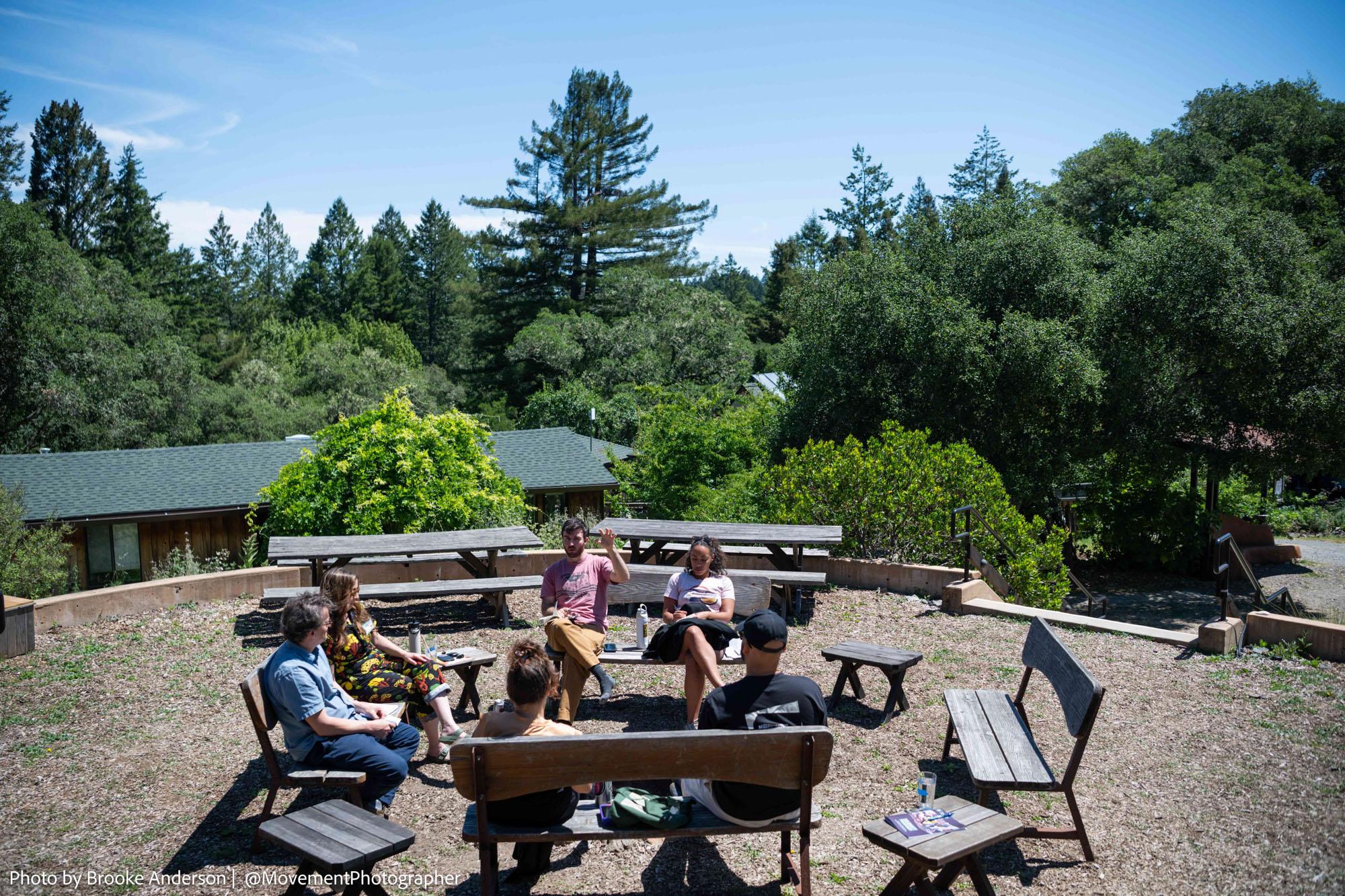
Social movements are currently in the process of sharpening their analysis of philanthropy and developing deeper relationships and alignment with those from its progressive quarters. We grappled with questions like where are the current greatest alignments between philanthropy and movements and where are the most important places to invest in political formation or education of progressive philanthropy. These served as on-ramps to practical discussions about opportunities for collaboration on current social movement priorities like global organizing around food sovereignty, a pastoralist forum, international feminist political education and training, demilitarization movements, and more.
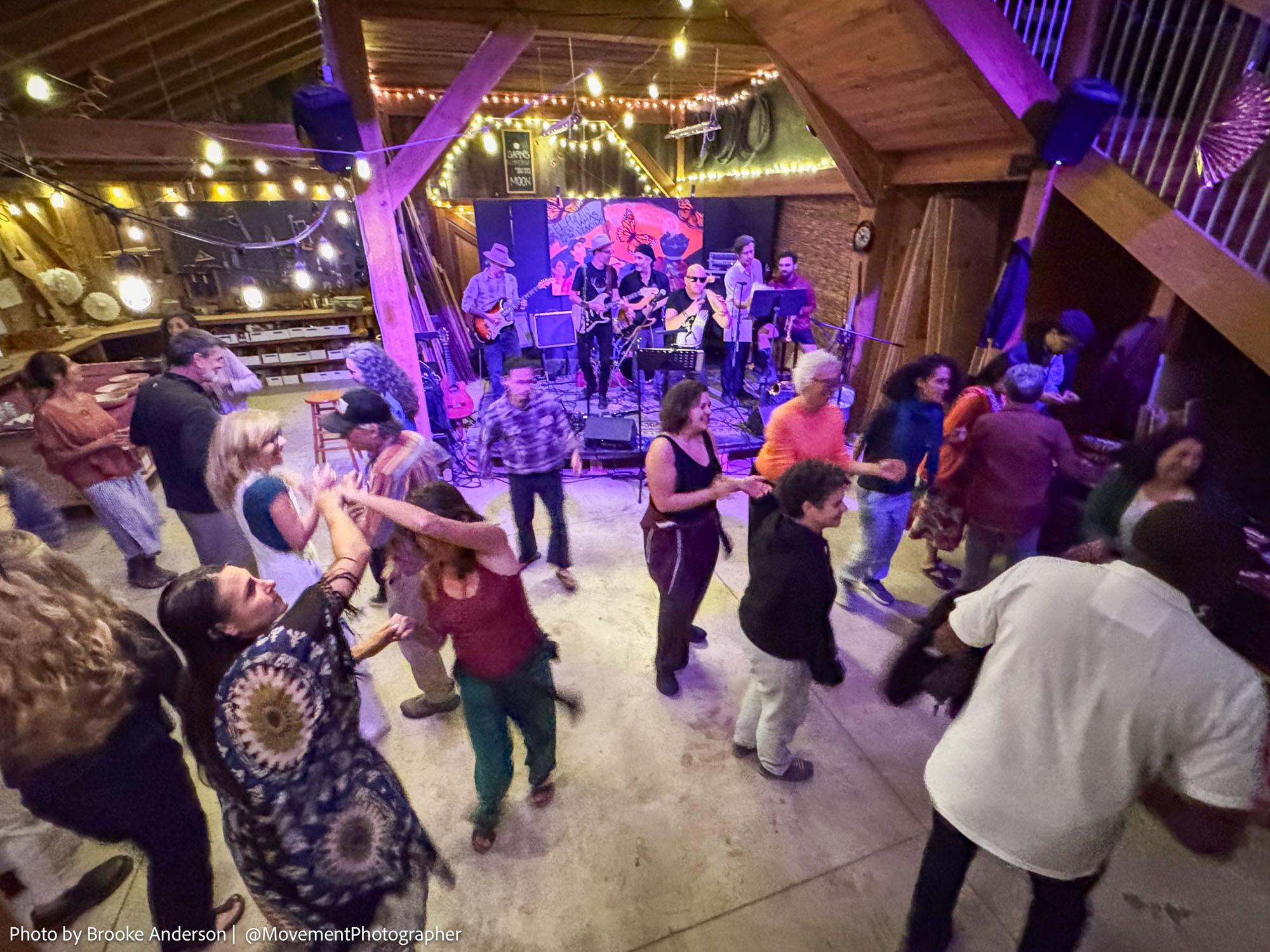
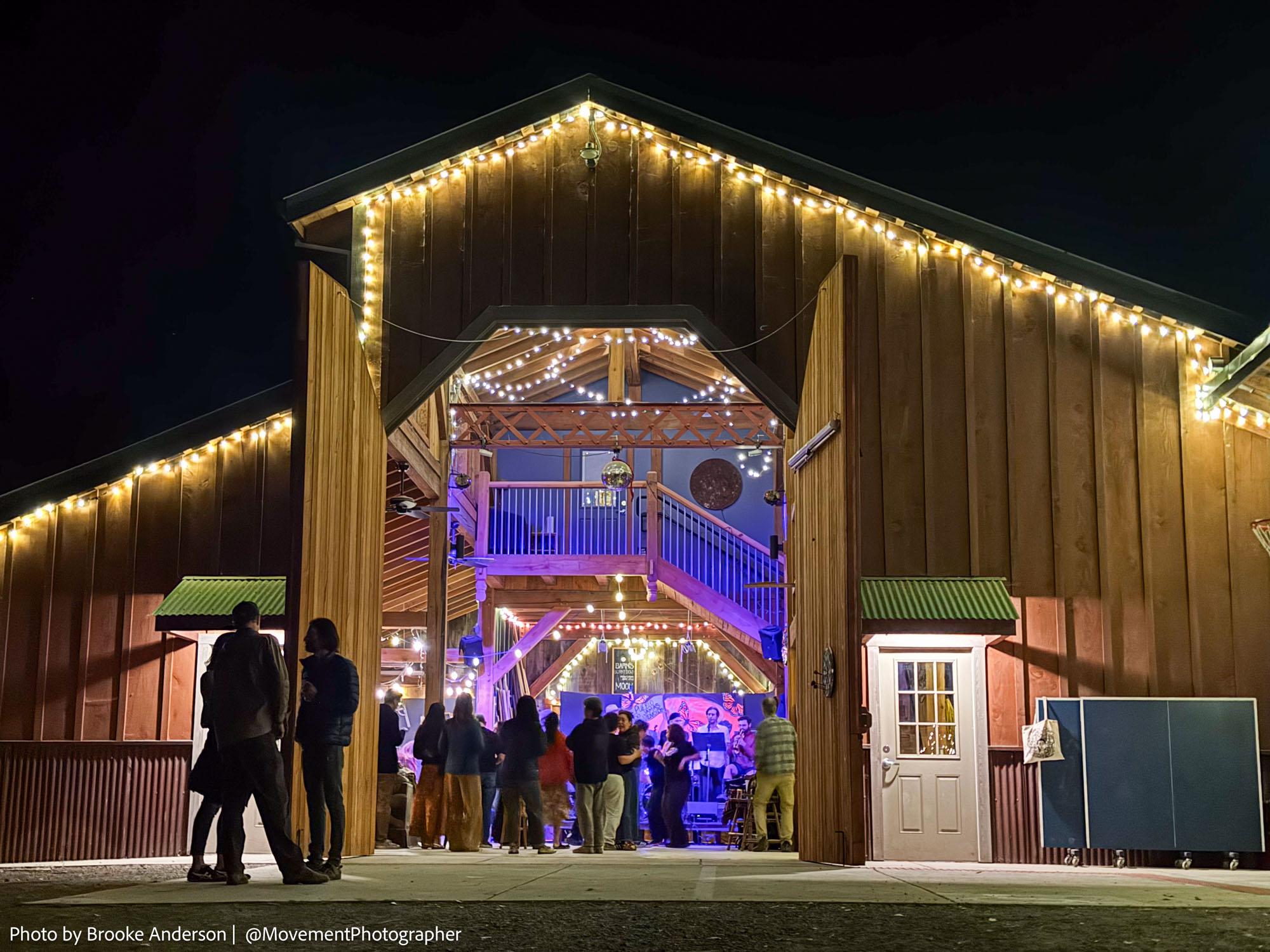
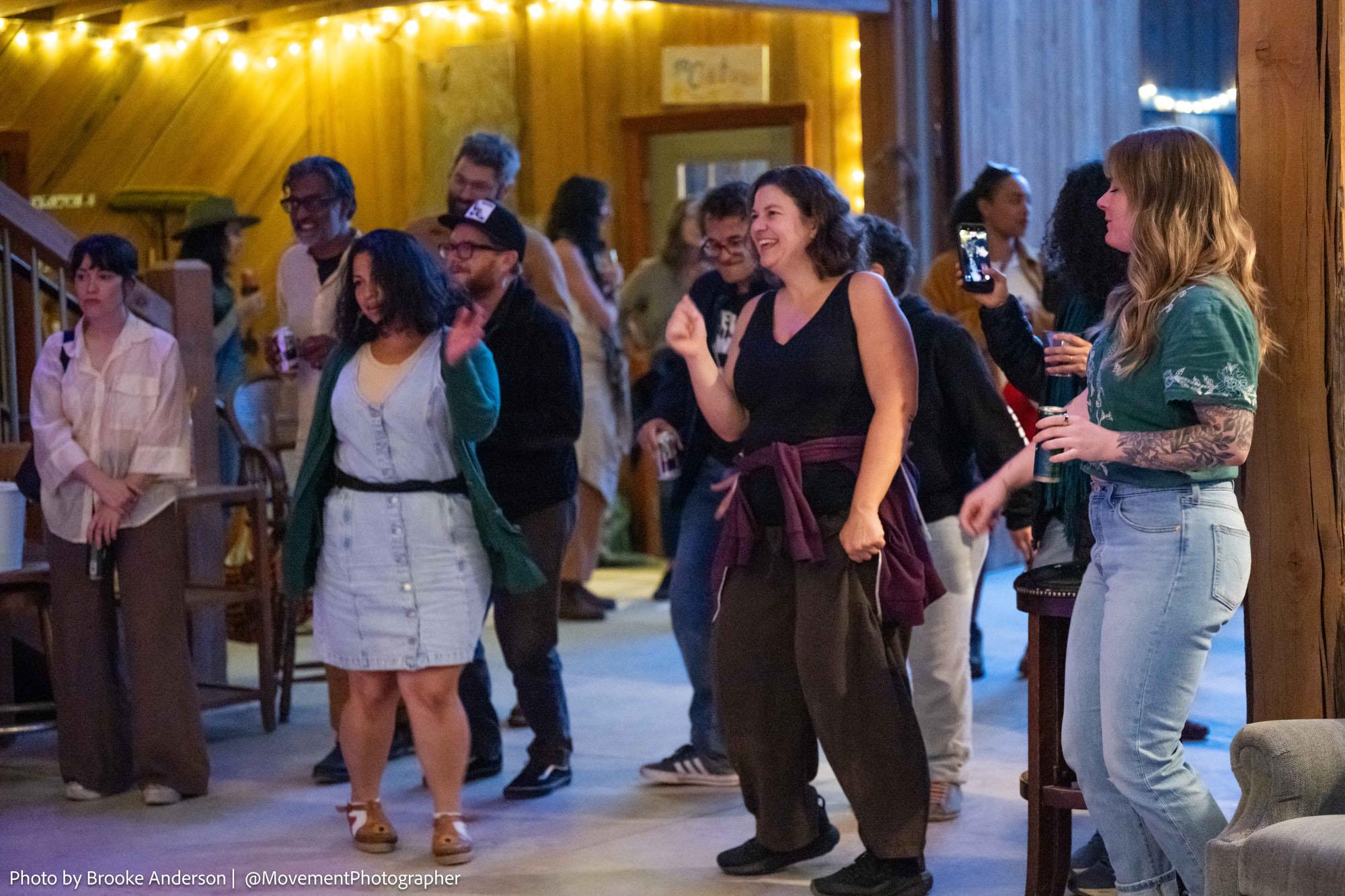
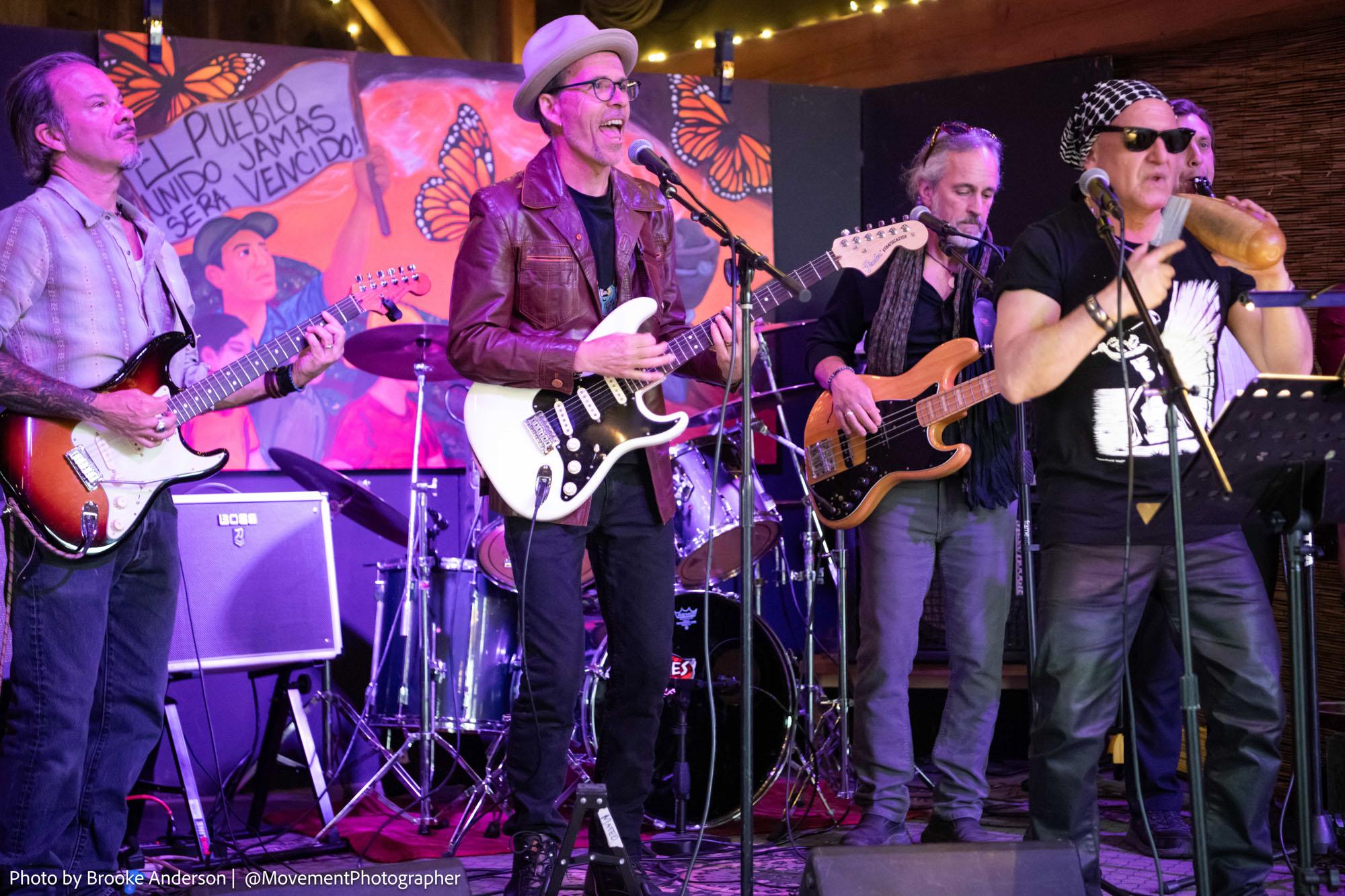
As if all of this wasn’t excitement enough, we closed with a rip-roaring Friday night concert in the OAEC barn. Performing was the band Los Nadies, named after an Eduardo Galeano poem and led by one of our board members. It was a joyous occasion that eventually brought us all to the dance floor.
“The Solidarity Philanthropy retreat is a space for us to meet with [people in philanthropy] and other social movements, to understand each other, and to have a clear understanding of each other’s way of work. To find the common ground, common objectives, and work together to benefit each other and to make sure that we have a better world.” —Khalid, social movement member


Committing to the Work Ahead
Our last full day together began by taking a closer look at the beta version of our forthcoming Solidarity Philanthropy Toolkit. It offers actionable opportunities to adapt practices and procedures for individuals and organizations in philanthropy. After several days building up to this, we asked participants to reflect on how they saw the Solidarity Philanthropy Framework and Toolkit differently in light of our experience together. Each participant was then given time and support in small groups to mold a commitment coming out of the retreat for advancing solidarity philanthropy.
The following day on our official close out of the retreat, we each wrote letters to our future selves, which captured these commitments as well as all of the learnings, stories, and emotions we wanted to carry into the future from this gathering. Then we packed up our things and began journeys to the various places we all call home, rejuvenated with the spirit of solidarity.