
Lessons from the Landless: A Donor’s Reflection on Wealth and Land Justice

It’s been just over a year since I visited Brazil with Grassroots International. Boarding the plane from Brasília last July—exhausted and heart-filled—I knew I’d carry many parts of that trip with me: the generosity, the shared meals and stories from Grassroots’ partners, the brilliant organizing strategies I witnessed, and the deep conversations with fellow participants.
Since then, memories from that trip surface weekly. Sometimes they’re prompted by a poster of Marielle Franco in my classroom, the MST hat I wear on occasion, or an unexpected photo memory that pops up on my iPhone. What I didn’t anticipate was how deeply the trip would provoke an ongoing reckoning with class, privilege, and the economic foundations of my own life.

For the past six years, I’ve been in psychoanalysis. Several times a week, I meet with an analyst to explore my day-to-day experiences and the underlying psychic patterns that shape them. Brazil, and what I encountered there, has become a persistent theme in these sessions.
In the 1940s, Frankfurt School thinkers like Adorno and Horkheimer developed the concept of the culture of domination, drawing from Marx. In my understanding, they argued that capitalism doesn’t just exploit labor—it also conditions people through media, institutions, and everyday culture. This culture naturalizes inequality and pacifies the general public by making domination feel like common sense and non-violent.
As someone raised in an upper-class, real estate-owning family and educated in elite private institutions, I’ve been immersed in this culture my entire life. In school, I was taught to view social issues as abstract debates, disconnected from the material realities of working-class people. As a beneficiary of a real-estate family business, I learned to see landlords as revitalizers and entrepreneurs, rent as inevitable, and homelessness as a personal failure. My family is generous in supporting progressive causes, but few of us have questioned the legitimacy of private property itself. This, I believe, is the culture of domination at work.
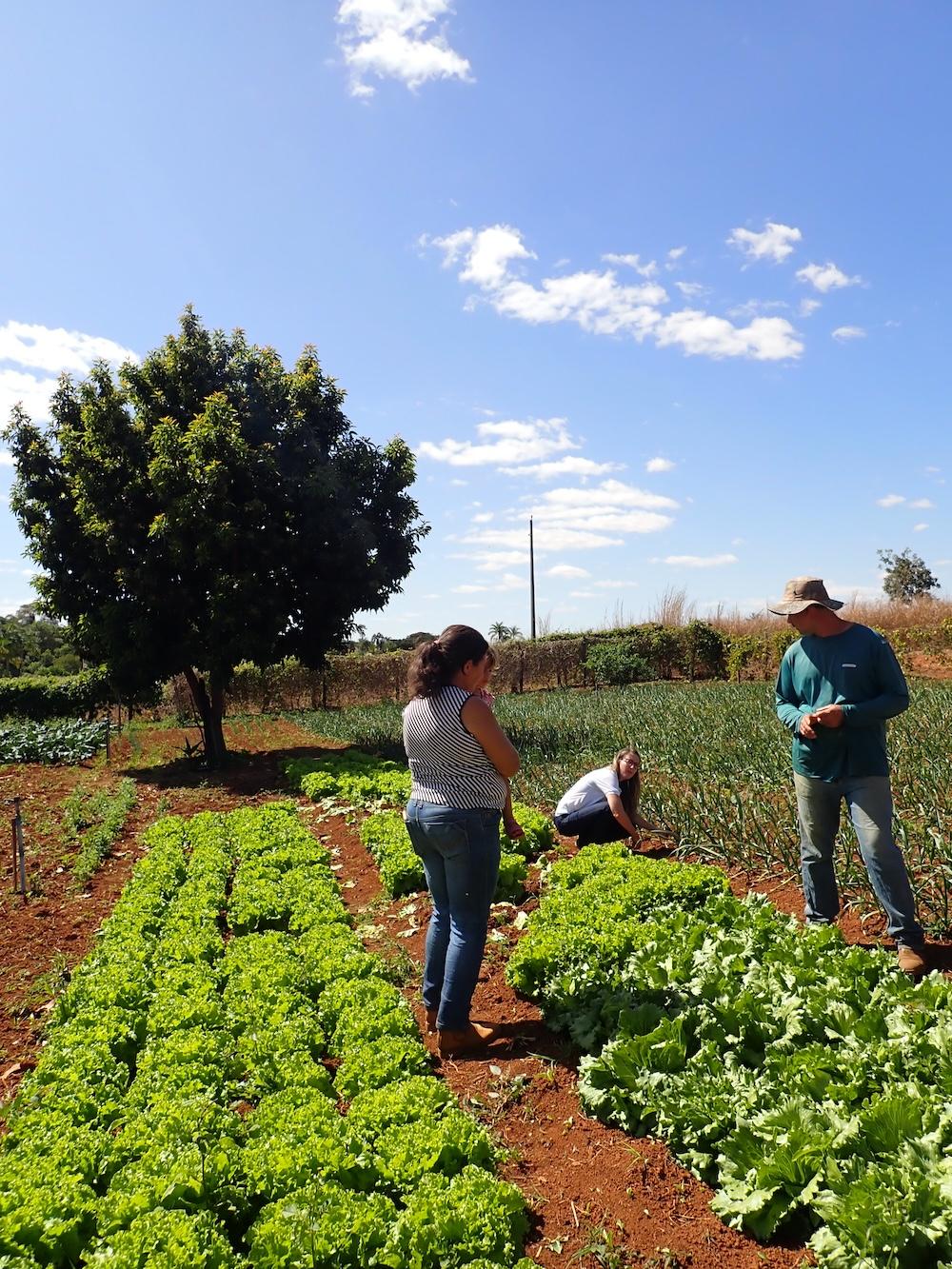
My experience in Brazil visiting the MST (Landless Workers’ Movement) and the MCP (Popular Peasant Movement) disrupted these assumptions I inherited. These movements resist capitalism and the culture of domination in material and imaginative ways. In line with Brazil’s constitution, the MST reclaims unproductive and/or misused land from agribusiness and large land owners. They establish collective governance and treat land as a shared resource to be cared for. The MCP resists corporate agriculture by exchanging seeds and knowledge, working to preserve community autonomy rather than relying on outside companies (often from the global North) that are tied to patents and profit. These movements don’t just resist corporate control—they challenge the myths that uphold it. Through theater, music, and art, they denaturalize capitalism’s promises and recover ways of being rooted in solidarity and care.

Throughout this year, I’ve worked in my weekly psychoanalysis to reconcile and understand the stories I learned growing up about land and wealth with the realities I saw with the MST and MCP. Brazil brought into focus a split I often feel in myself: a disconnection from the daily exhaustion experienced by working-class communities. I can be compassionate, but I can’t fully understand their struggles. I’ve been questioning the stories I inherited about land, usefulness, and ownership—stories that once felt natural but now feel deeply constructed. I often experience a psychic pain that feels intolerable when trying to hold the contradictions.
At my most grounded, I’m learning to hold both realities: the intergenerational wealth and narratives I’ve inherited, and the truth that people are actively resisting the very structures that produced them. Healing this internal divide requires more than reflection—it requires community and action. For me, that means deepening my practices of solidarity, giving boldly, seeking out the experience of working class people, and participating in social justice movements in my own community.


