Resisting REDD+: Africa’s Struggles Against False Climate Solutions
REDD+ promised to be a win-win solution for climate and development. Instead, it has deepened inequalities, expanded extractivism, and handed global polluters a dangerous new license to continue destroying the planet.
As the UN Climate Change Summit (COP30) approaches in November 2025, climate justice groups across Africa are mobilizing to make their voices heard. Their goal: to challenge and expose the false climate solutions that COP gatherings have repeatedly promoted. Among these movements is the No REDD in Africa Network (NRAN), a key ally of Grassroots International.
In 2011, during the United Nations Climate Summit (COP 17) in Durban, South Africa, a group of African social movements, climate justice activists, and environmental organizations gathered to discuss the looming threat of Reducing Emissions from Deforestation and Forest Degradation (REDD+), a newly proposed climate change solution. Two years later, at the World Social Forum in Tunis, Tunisia, these conversations gave birth to NRAN. Coordinated by the Health of Mother Earth Foundation (HOMEF, Nigeria) and Justiça Ambiental/Friends of the Earth Mozambique, Grassroots International’s partner and ally respectively, NRAN has since become one of the strongest collective voices challenging the expansion of REDD+ and related carbon market schemes across the continent.
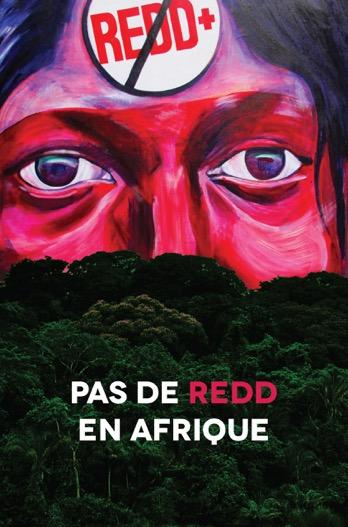
At its heart, NRAN’s mission is clear: to expose REDD+ as a false solution to climate change, one that commodifies African forests, undermines community sovereignty, and deepens inequalities while allowing the world’s worst polluters to continue business as usual.
REDD is a false solution and must be called out as such.
REDD+ was introduced under the UN Framework Convention on Climate Change (UNFCCC) as a mechanism to reduce global greenhouse gas emissions by providing financial incentives for countries of the Global South to “protect” their forests. In theory, countries or companies in the Global North could offset their carbon emissions by paying for forest conservation projects in the Global South.
Over time, REDD+ has been folded into the broader expansion of carbon markets. Through these schemes, forests and other ecosystems are turned into carbon sinks whose stored carbon can be sold as credits on international markets. These credits are then bought by corporations and governments to “compensate” for continued emissions.
While this framework might sound beneficial on the surface – saving forests while funding rural development – nearly fifteen years of forest-dependent communities living under it has yielded starkly different results.
Why is REDD+ Dangerous for Forest Peoples?

Across Africa, REDD+ projects have led to displacement, dispossession, and new forms of exploitation for the very communities that have lived in and protected forests for generations. As recently launched NRAN research shows, REDD+ operates through a logic of “green extractivism.” Much like the extraction of minerals or oil, carbon markets treat natural ecosystems as resources to be captured, privatized, and traded – this time in the form of carbon credits.
This process strips rural households of their rights to land, forests, and traditional practices. Communities are often barred from accessing forests they once depended on for food, firewood, or cultural activities, in order to preserve “carbon stocks” for distant buyers. At the same time, corporations in the fossil fuel sector benefit by claiming to be climate leaders while continuing to pollute.
As Anabela Lemos, Director of Justiça Ambiental/Friends of the Earth Mozambique, puts it:
REDD is a false solution and must be called out as such. It not only permits continued carbon emissions by polluting entities such as fossil fuel corporations, but offers them opportunities to benefit from carbon credits while dispossessing forest dependent communities of their territories and related benefits.
The result is a double injustice: African communities lose their land and livelihoods, while global polluters gain new tools for greenwashing.
Resisting Carbon Colonialism
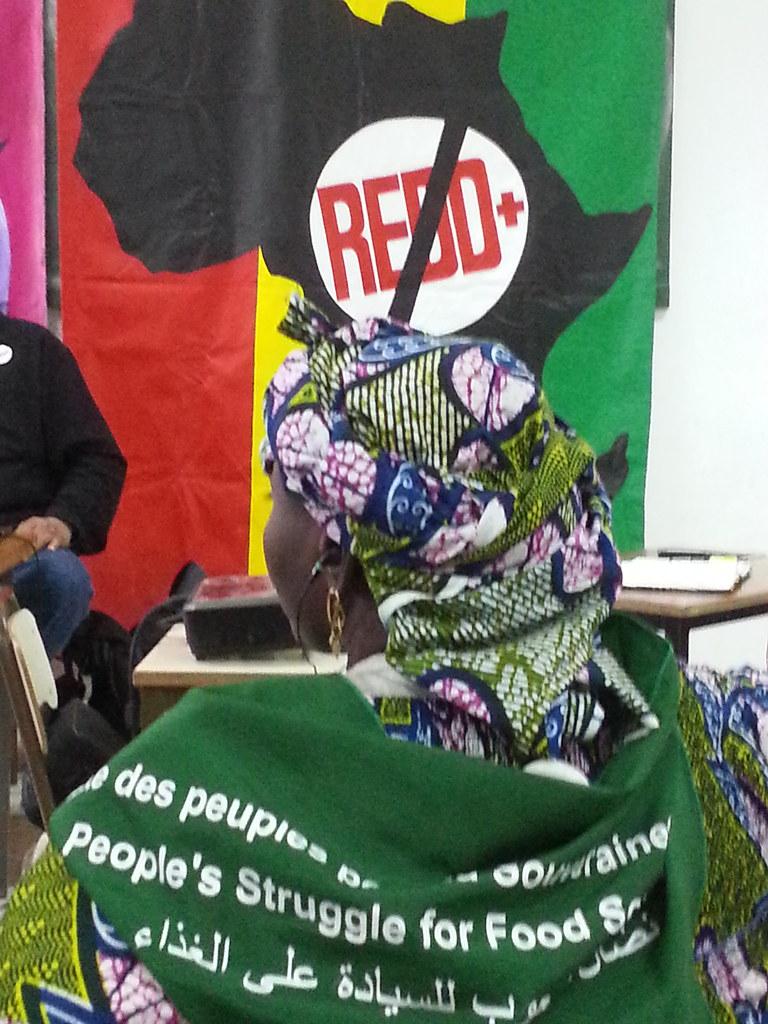
For NRAN, the struggle against REDD+ is fundamentally about resisting a new wave of colonialism – what many activists call carbon colonialism. This refers to the way African lands, forests, and biodiversity are being rebranded as global climate assets, controlled by international financial institutions, corporations, and new initiatives like the African Carbon Markets Initiative (ACMI).
Launched in 2022, ACMI aims to make Africa a leading supplier of carbon credits, turning them into one of the continent’s top export commodities. But as the NRAN research report – presented at the West Africa Climate Justice Roundtable in Abuja, Nigeria (July 2025) – warns, this vision poses profound risks for sovereignty, democracy, and ecological justice.
According to the report:
- African resources are being commodified for global carbon markets, not for local benefit.
- Projects like REDD+, “blue carbon,” and so-called “climate-smart agriculture” are imposed on rural households, often reshaping traditional livelihoods.
- Green extractivism reproduces the same exploitative relations that created the climate crisis in the first place.
As Nnimmo Bassey, Director of HOMEF, explains:
As the name connotes, NRAN is absolutely opposed to the spread of the false climate solutions such as the variants of REDD used as a cover to propagate carbon slavery, colonize African forests, displace forest dependent communities and destroy the very base of their socio-cultural life.”
Exposing Injustices and Human Rights Violations
One of NRAN’s key contributions has been to document and publicize the lived impacts of REDD+ projects on the ground. For instance, the network has highlighted violations linked to the Kasigua Corridor REDD+ project in Kenya, where the Kenyan Human Rights Commission denounced a decade-long record of sexual violence against women tied to the project.
Such cases reveal how REDD+ not only displaces communities but also amplifies gendered violence and social vulnerability. By centering these stories, NRAN connects the dots between climate policy, human rights, and structural injustice.
As Natacha Bruna, NRAN researcher, notes:
Working on the NRAN research exposed the intentional but quiet spread of REDD projects on the continent leaving in its trail several underreported stories of human rights abuses, community displacement and dispossession with immeasurable devastating ripples.
Strategies of Resistance
Resisting REDD+ is not easy. Its defenders often wrap it in powerful language: “saving the planet,” “building resilience,” “protecting future generations.” To counter these narratives, NRAN emphasizes two complementary strategies:
- Deconstructing “green” legitimacy discourses. By exposing the ineffectiveness of REDD+ – it doesn’t actually reduce emissions or protect biodiversity – activists can challenge its moral authority.
- Building people-centered alternatives. This involves strengthening African-led climate justice movements, amplifying community voices, and insisting on non-extractive, transformative climate action.
The network calls for envisioning broader systemic change beyond carbon markets.
As OduduAbasi Asuquo, NRAN Coordinator, highlights:
The reactivation of NRAN has reawakened evidence-driven critiques and interdisciplinary insights on REDD and carbon markets. Initiatives like this are essential for reframing the climate discourse in ways that are equitable and ecologically sound for African communities.
Defending Territory, Defending the Future

Ultimately, the fight against REDD+ is not only about climate policy. It is about defending territory, culture, and sovereignty. Forest peoples across Africa have been the original guardians of biodiversity, long before international carbon markets emerged. Their ways of living with the land offer lessons for genuine climate solutions rooted in justice, care, and reciprocity – not in commodification.
NRAN’s work reminds us that resisting REDD+ is an act of defense: of land rights, of community dignity, of Africa’s future. It is also an act of global solidarity, as what happens in African forests reverberates across the climate justice movement worldwide.
As Grassroots International continues to support NRAN, the network grows stronger, weaving connections between local struggles and global debates. In doing so, it offers a powerful counter-narrative: one where African voices are not silenced by green markets but lead the way in imagining true climate justice.
What happens in African forests reverberates across the climate justice movement worldwide.
REDD+ promised to be a win-win solution for climate and development. Instead, it has deepened inequalities, expanded extractivism, and handed global polluters a dangerous new license to continue destroying the planet.
Through the No REDD in Africa Network, African communities are pushing back, reclaiming their rights, and insisting that real climate solutions come not from markets, but from solidarity, sovereignty, and ecological justice. Their message is clear: forests are not carbon stocks to be sold. They are living territories, cultures, and homes worth defending.
This is the second article in a series on the Tropical Forest Initiative spearheaded by the CLIMA Fund, of which Grassroots International is part. The efforts described above are supported by this initiative.


